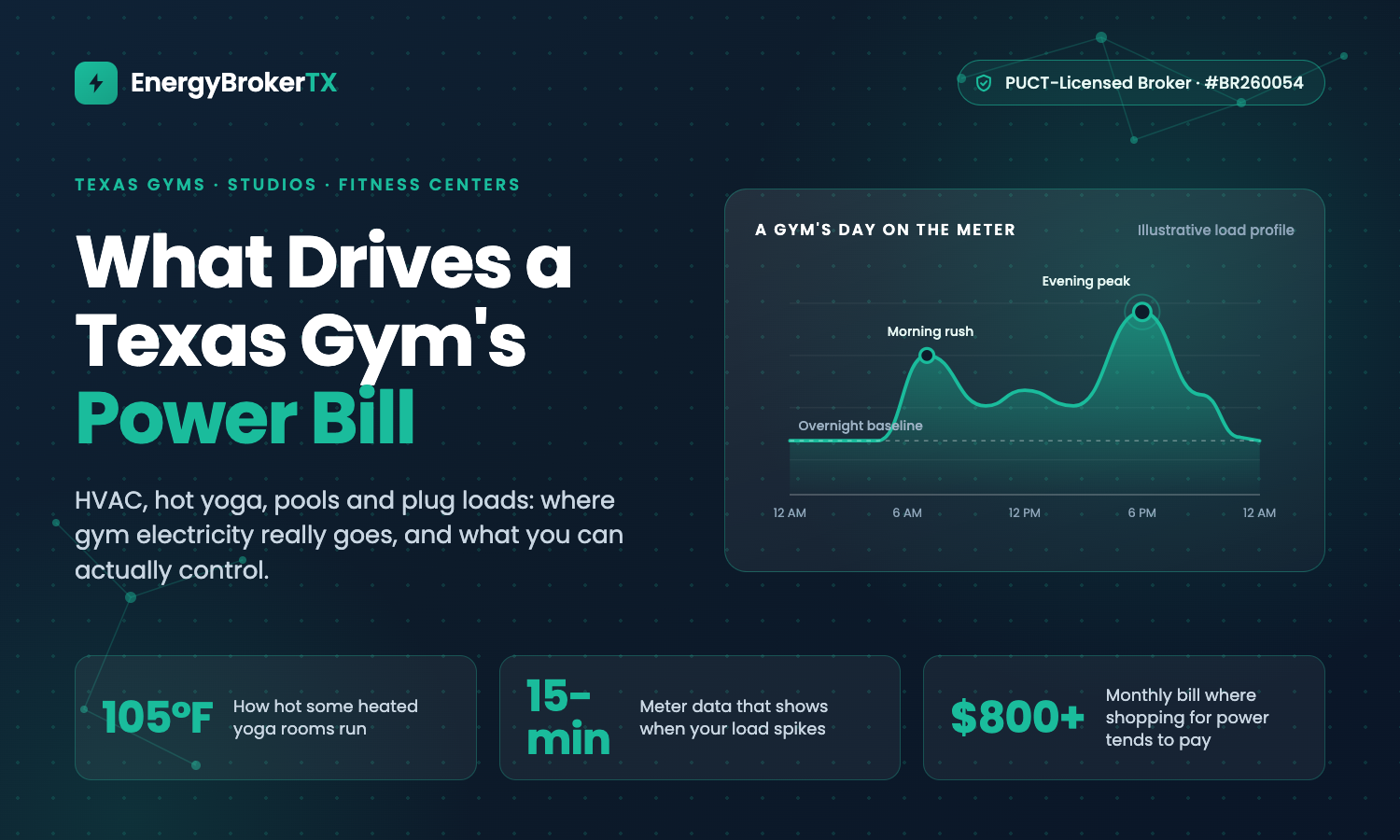
Texas Gyms, Yoga Studios and Fitness Centers: What Drives the Power Bill
What drives the power bill at Texas gyms, yoga studios and fitness centers, from HVAC and hot yoga to pools, and when shopping your rate pays off.


In the vast landscape of Texas, where everything is bigger—including energy demands—understanding how energy pricing and purchasing operates can feel overwhelming. Whether you're a homeowner in Dallas trying to keep your AC bills in check during scorching summers or a business owner in Midland powering oil and gas operations, the state's deregulated energy market offers opportunities for savings and choice. But how exactly does it all work? This comprehensive guide breaks down the intricacies of Texas energy pricing and purchasing from the perspective of both residential and business consumers. We'll explore the deregulated system, factors influencing prices, step-by-step purchasing processes, and tips to help you make informed decisions that could slash your energy costs.
Texas leads the nation in energy deregulation, a system that transformed the electricity market starting in 2002 with Senate Bill 7. Before deregulation, consumers had no choice—they bought electricity solely from their local utility company, which controlled generation, transmission, distribution, and sales. This monopoly often led to higher prices and limited innovation.
Deregulation broke this up, separating the roles: Power plants generate electricity, transmission and distribution utilities (TDUs) like Oncor or CenterPoint deliver it to your home or business, and Retail Electric Providers (REPs) sell it to you. Today, about 85% of Texans live in deregulated areas, including major cities like Houston, Dallas, Fort Worth, Austin, and San Antonio. In these zones, you can't buy directly from the utility; instead, you choose from competing REPs, fostering competition that has driven down rates. For instance, residential electricity rates in Texas are 10.4% below the national average, while commercial rates are a whopping 38.1% lower.
The Electric Reliability Council of Texas (ERCOT) oversees the grid, balancing supply and demand in real-time to ensure reliability. This setup empowers consumers: Residential users can pick plans tailored to their household usage, while businesses benefit from customizable options for high-demand operations. However, regulated areas (like El Paso or parts of East Texas) still operate under monopolies, where the utility sets the rates.
Energy pricing in Texas isn't static—it's influenced by a dynamic wholesale market managed by ERCOT. Wholesale prices fluctuate based on supply and demand, fuel costs (primarily natural gas), weather events, and renewable energy output. During peak demand, like Texas heatwaves or winter storms, prices can spike dramatically. Remember the 2021 winter storm? Wholesale prices soared to $9,000 per megawatt-hour, highlighting the market's volatility.
REPs buy electricity from this wholesale market and repackage it into retail plans for consumers. As a consumer, your bill includes:
Plans come in types:
For residential consumers, average rates hover around 12-15 cents per kWh, but businesses might see lower base rates with added demand charges based on peak usage. Grid constraints or fuel shortages can push prices up, but competition among over 100 REPs keeps things in check.
As a Texas homeowner or renter, purchasing electricity in a deregulated area is straightforward but requires diligence to avoid pitfalls.
Residential consumers can save hundreds annually by switching—deregulation has led to innovative plans like time-of-use rates that reward off-peak usage.
Businesses in Texas face similar processes but with added complexity due to higher consumption and demand-based pricing.
Commercial rates' steep discount below national averages makes Texas attractive for energy-intensive industries like manufacturing or data centers.
Navigating this market alone can be time-consuming. That's where energy brokers like EnergyBrokerTX come in. As independent experts, we don't sell energy—we shop for you, using reverse auctions to pit REPs against each other for the best rates. For residential users, we simplify plan selection; for businesses, we negotiate custom deals, often saving 10-20% on bills. Our local Texas knowledge ensures plans fit your needs, from Permian Basin operations to urban retail spaces.
Texas's deregulated energy market puts power in your hands—literally. By understanding pricing dynamics and the purchasing process, residential and business consumers can secure lower rates, greener options, and greater control. Whether switching providers or optimizing usage, informed choices lead to significant savings. Ready to explore? Contact EnergyBrokerTX today to start your personalized energy auction and unlock better rates.
Submit your account and we'll run a competitive auction with 25+ licensed Texas providers — full bid transparency, no pre-filtering, no obligation.
Get My Free Competing Bids →