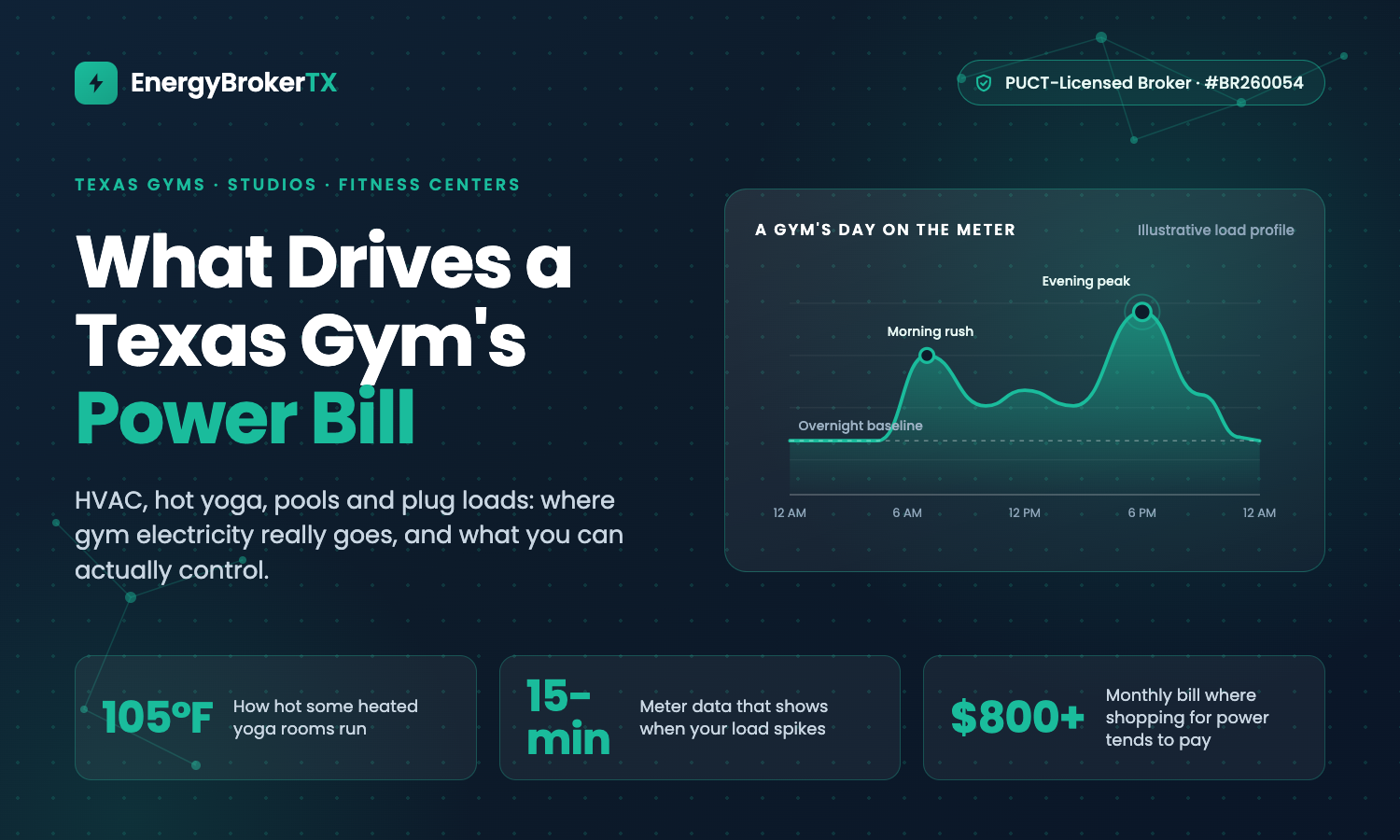
Texas Gyms, Yoga Studios and Fitness Centers: What Drives the Power Bill
What drives the power bill at Texas gyms, yoga studios and fitness centers, from HVAC and hot yoga to pools, and when shopping your rate pays off.

As a pastor or church administrator in Texas, managing your congregation's finances is more than just balancing the books—it's an act of stewardship. With rising operational costs, one area that often weighs heavily on church budgets is electricity. If your church's electricity contract is nearing expiration, you're likely searching for answers to questions like "how do I renew my church electricity contract?" or "what's the best way to save on church energy bills?" Renewing or switching your energy plan can lead to significant savings, freeing up funds for outreach, missions, and community programs.
In Texas's deregulated energy market, churches have the power to shop around for competitive rates, but timing and knowledge are key. This guide covers everything you need to know about renewing your church's electricity contract, including when to start, the best months for renewal, common bill charges, potential tax exemptions, and real-world savings. We'll also highlight how partnering with a specialized energy broker like EnergyBrokerTX can simplify the process and maximize your ministry's budget.
Before diving into renewal, it's essential to understand what's on your church's electricity bill. Texas churches, like other non-residential customers, face a variety of charges that can add up quickly—especially for larger facilities with high usage from lighting, HVAC systems, sound equipment, and events. Knowing these components helps you identify where savings are possible and underscores the importance of stewardship in managing God's resources wisely. For a deeper dive into strategies for reducing these costs, check out our Texas Church Electricity Savings Guide.
By reviewing your bills regularly—perhaps quarterly as part of your financial stewardship routine—you can spot trends and prepare for renewal. Tools like online portals from providers or brokers can provide detailed breakdowns, helping you forecast costs and allocate more to ministry outreach.
One of the most common mistakes church administrators make is delaying the renewal process, leading to automatic switches to expensive month-to-month rates. In Texas, energy providers must notify you 30-60 days before your contract ends, but starting earlier gives you leverage.
Ideally, begin shopping 2-3 months before expiration. This window allows time to compare quotes, negotiate terms, and avoid rushed decisions. If your contract ends during peak seasons (more on that below), consider a short-term extension or odd-length plan (e.g., 3-6 months) to shift renewal to a better time. Early action not only secures lower rates but also demonstrates wise stewardship, ensuring your church's funds are directed toward eternal impact rather than inflated utility bills.
For smaller churches with tight budgets, this proactive approach can prevent surprises. If you're unsure about your expiration date, check your contract or bill—it's usually listed clearly. Energy brokers can review this for free, saving you time amid your busy ministry schedule.
Timing is everything in Texas's volatile energy market, influenced by weather, demand, and natural gas prices. Renewing during high-demand periods can lock you into higher rates, straining your church's resources and limiting funds for community service or building maintenance.
The best months to renew are during "shoulder seasons"—spring (March-April) and fall (October-November)—when milder weather reduces statewide demand. Historical data shows rates are often 10-20% lower then compared to summer peaks. Avoid July-August (scorching summers drive up AC usage) and January (cold snaps increase heating needs), as these months typically see the highest rates.
For churches, aligning renewal with these low-rate periods can yield substantial savings. Imagine redirecting those dollars to youth programs or food pantries—true stewardship in action. If your current contract ends in a bad month, opt for a bridge plan to realign your cycle.
Renewing doesn't mean sticking with your current provider—Texas's deregulation lets you switch for better deals. Here's a step-by-step guide tailored for busy church leaders:
This process can be overwhelming amid sermon prep and counseling— that's where expert help shines.
As a non-profit religious organization, your Texas church may qualify for sales tax exemptions on electricity bills, reducing that 6.25%+ tax burden. This isn't automatic; you must apply with the Texas Comptroller of Public Accounts. To qualify, your church must be an organized group holding regular worship services at a fixed location—most congregations fit this.
Exemptions are granted case by case, but approved churches can save significantly on taxes for purchases, including utilities. EnergyBrokerTX can guide you through the application, ensuring compliance and maximizing relief. These savings directly bolster your outward ministry, turning utility dollars into discipleship resources.
Consider the story of a mid-sized church in Temple, Texas, using about 600,000 kWh annually. Their old contract had a 7.9 cents per kWh rate, burdening their budget amid growing ministry needs. Facing renewal, they partnered with EnergyBrokerTX. We analyzed their usage, shopped the market, and secured a 48-month fixed-rate plan at 6.1 cents per kWh. This locked in annual savings of $10,800—over $43,000 across the term—compared to renewing at their previous rate. These funds now support expanded community outreach, like food drives and youth camps, embodying faithful stewardship.
This isn't unique; many Texas churches see 10-30% reductions by switching strategically.
At EnergyBrokerTX, we understand the unique challenges of church budgets—limited resources, variable usage, and a calling to serve. As Dallas-based experts in Texas's energy market, we handle the complexities so you can focus on ministry.
We compare rates from top Retail Energy Providers (REPs), negotiate custom plans, and even assist with tax exemption filings. Whether renewing your current contract or switching for better terms, our no-cost service ensures the lowest rates without hidden fees. Past clients report average savings of 15-25%, freeing thousands for Kingdom work.
In a world of tight margins, reducing energy costs isn't just smart—it's stewardship. Let us help redirect your funds from bills to blessings.
If your church's electricity contract is up for renewal, don't let high rates hinder your mission. Contact us today for a free and personalized quote. Visit our website or call (737) 295-9735 to start saving—because every dollar saved is a dollar for ministry. Let's partner in stewardship for a brighter future.
Submit your account and we'll run a competitive auction with 25+ licensed Texas providers — full bid transparency, no pre-filtering, no obligation.
Get My Free Competing Bids →