Why Texas Businesses Need a Strategic Partner, Not Just a Broker, for Commercial Electricity Procurement
As a business owner or executive in Texas, you're operating in the nation's most dynamic—and complex—energy market. With over 130 licensed retail electricity providers competing for your business and average commercial rates fluctuating around 8.60 ¢/kWh, the opportunity for savings is substantial. Yet the path to securing optimal commercial electricity rates in Texas requires more than a simple price comparison. It demands strategic energy procurement expertise that transforms electricity from a fixed overhead cost into a competitive advantage.
The Texas Deregulated Energy Market: Opportunity Hidden in Complexity
Texas deregulated its electricity market in 2002, creating the largest competitive energy landscape in the United States. This transformation means businesses across Houston, Dallas, Austin, San Antonio, Fort Worth, El Paso and over 400 cities now exercise their power to choose their commercial electricity provider. While competition theoretically drives down commercial electricity rates, the reality for most businesses is decision paralysis.
The market structure itself explains why: generators sell power into the ERCOT wholesale market, transmission and distribution utilities (Oncor, CenterPoint, AEP Texas, Texas-New Mexico Power) deliver it through regulated infrastructure, and retail electric providers (REPs) package these components into contracts. Your final commercial electricity bill comprises the energy charge, TDSP delivery fees, capacity and ancillary service charges, taxes, and various pass-through costs that differ by provider.
For a mid-sized commercial operation consuming 50,000 kWh monthly, a rate differential of just 0.5 ¢/kWh translates to $3,000 in annual savings. For large industrial facilities using 500,000 kWh monthly, that same spread represents $30,000. The stakes are significant, but navigating this complexity requires specialized expertise that most internal teams lack.
Why "Good Enough" Energy Procurement Costs You Six Figures
Many Texas businesses approach commercial electricity procurement reactively—waiting until their current contract expires, soliciting three quotes, and selecting the lowest advertised rate. This conventional approach creates three critical vulnerabilities:
First, pricing transparency is largely illusory. The commercial electricity rates Texas providers advertise rarely reflect your actual cost structure. Contract terms governing early termination fees, bandwidth allowances (the range between minimum and maximum usage commitments), renewal clauses that default to higher rates, and pass-through charge variations can increase your effective rate by 15-30% above the quoted figure.
Second, market timing misalignment erodes savings. Wholesale electricity prices in Texas fluctuate based on natural gas prices, seasonal demand, generation capacity, and regulatory changes. Locking into a fixed-rate contract during a market peak—even a "competitive" rate—can cost tens of thousands in opportunity cost over a 36-month term.
Third, load profile mismatch creates hidden penalties. Businesses with seasonal operations, manufacturing cycles, or expansion plans face bandwidth penalties when actual usage deviates from contracted volumes. A 10% variance penalty on a $10,000 monthly bill adds $12,000 annually in avoidable charges.
The fundamental issue: commercial electricity procurement in Texas isn't a commodity purchase—it's a risk management exercise requiring continuous market monitoring, load forecasting, and contract structuring expertise.
What Separates Strategic Energy Advisors from Transactional Brokers
With over 1,300 energy brokers registered with the Public Utility Commission of Texas, the brokerage landscape ranges from commissioned sales operations to sophisticated energy consulting firms. Understanding this distinction is critical for decision-makers evaluating commercial electricity broker services.
Transactional brokers operate on a commission-per-kWh model, incentivizing volume over value. Their business model rewards signing you to the highest-usage contract possible, often with providers offering the broker the strongest financial incentives rather than delivering the best commercial electricity rates for your business. Many maintain marketing agreements with specific REPs, creating inherent conflicts of interest.
Strategic energy advisors function as outsourced procurement departments, compensated through transparent fee structures that align their success with your savings. They provide:
- Load profile analysis examining 12-24 months of interval usage data to understand consumption patterns, peak demand characteristics, and flexibility
- Market intelligence tracking ERCOT forward curves, natural gas futures, generation capacity additions, and regulatory developments affecting Texas commercial electricity rates
- Custom contract structuring designing hybrid solutions like block-and-index arrangements that lock in a baseline volume at fixed rates while floating incremental usage to capture market dips
- Risk management frameworks balancing budget certainty against market opportunity based on your business's financial objectives and risk tolerance
- Ongoing optimization continuously monitoring the market for better opportunities and managing contract renewals proactively
This consultative approach transforms the broker from a vendor into a strategic partner who understands your operational constraints, growth plans, and financial KPIs.
The Strategic Procurement Framework: From Analysis to Optimization
A sophisticated commercial electricity procurement process follows a disciplined methodology that mirrors the strategic sourcing frameworks used in private equity due diligence and management consulting:
Phase 1: Baseline Assessment and Load Characterization
The engagement begins with comprehensive data analysis, not sales pitches. Your strategic advisor should evaluate:
- Historical interval usage data (15-minute increments) to identify consumption patterns
- Peak demand profiles and load factors affecting capacity charges
- Seasonal variations and operational flexibility for demand shifting
- Facility expansion plans, equipment upgrades, or process changes impacting future usage
- Current contract terms, renewal dates, and early termination penalties
This analysis reveals your true cost structure beyond the headline commercial electricity rates, exposing hidden fees, demand charges, and contractual constraints.
Phase 2: Market Intelligence and Strategy Development
Using real-time wholesale market data from ERCOT, your advisor develops a procurement strategy aligned with market conditions:
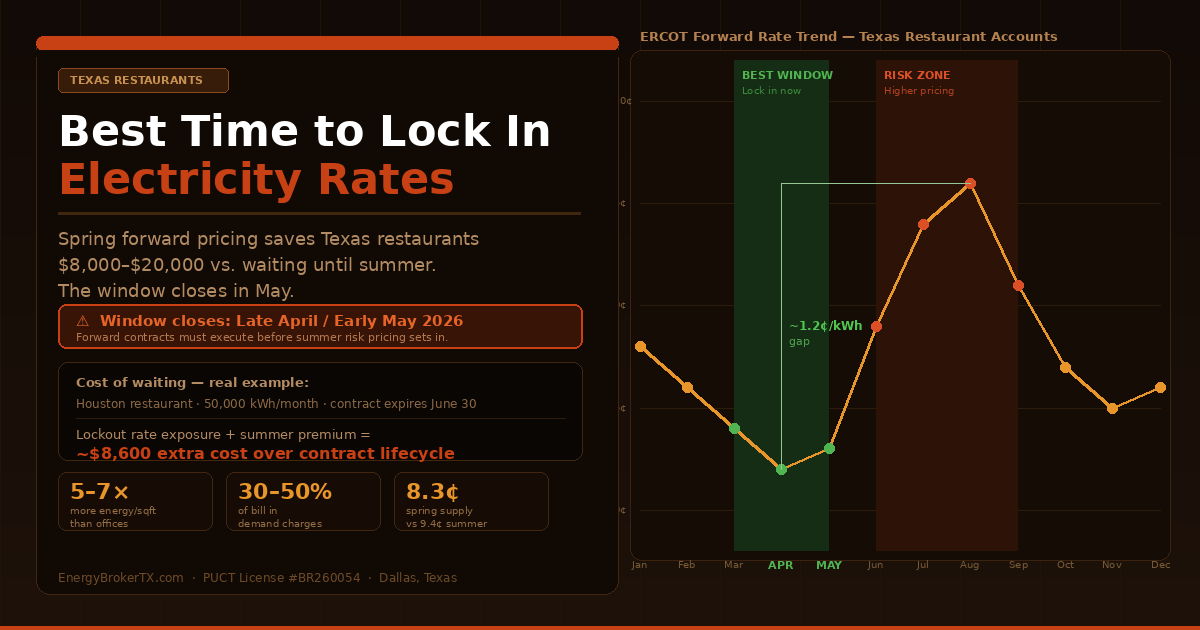
- Forward curve analysis evaluating whether to lock rates now or wait based on seasonal patterns
- Product structure selection determining optimal mix of fixed, variable, or indexed components
- Contract term optimization balancing longer-term rate security against market flexibility
- Provider evaluation assessing financial stability, customer service track record, and contract flexibility
For Texas businesses with multi-site operations across different TDSP territories, this phase includes aggregation strategies that leverage combined purchasing power while accounting for regional delivery cost variations.
Phase 3: Competitive Solicitation and Negotiation
Rather than requesting generic quotes, your advisor issues a detailed Request for Proposal specifying:
- Exact load profile characteristics and bandwidth requirements
- Preferred contract structures and risk allocation
- Service level expectations and account management protocols
- Renewal and assignment provisions for M&A scenarios
This approach yields comparable proposals and creates leverage for negotiating commercial electricity rates, fee waivers, and favorable terms that aren't available through standard channels.
Phase 4: Implementation and Continuous Management
Post-execution, strategic partners provide ongoing value:
- Bill auditing verifying charges match contracted terms and identifying billing errors
- Usage monitoring tracking consumption against contract bandwidth to avoid penalties
- Market tracking identifying early renewal opportunities when market conditions favor renegotiation
- Regulatory compliance ensuring adherence to PUCT reporting requirements and managing provider disputes
This continuous management typically delivers an additional 5-8% savings beyond the initial procurement by optimizing contract performance throughout the term.
Critical Evaluation Criteria: Selecting Your Texas Energy Partner
When evaluating commercial electricity broker services in Texas, decision-makers should apply the same rigorous due diligence used for any strategic vendor:
1. Regulatory Standing and Transparency
Verify PUCT licensing and demand full disclosure of compensation structures. Reputable advisors transparently charge either flat fees or transparent per-kWh commissions—not hidden kickbacks from REPs. Request written confirmation of fiduciary duty to your interests.
2. Market Sophistication and Analytical Capabilities
Assess their wholesale market expertise. Can they explain ERCOT's day-ahead and real-time market mechanisms? Do they track natural gas futures and generation capacity auctions? Do they utilize professional-grade energy management platforms or basic spreadsheets? The depth of their analytics directly impacts your commercial electricity rates.
3. Contract Engineering Expertise
Evaluate their experience with complex commercial structures beyond simple fixed-rate plans. Can they articulate the trade-offs between block-and-index, load-following, and time-of-use products? Have they structured contracts for businesses with similar load profiles and operational constraints?
4. Industry-Specific Experience
Commercial energy needs vary dramatically by sector. Manufacturing facilities face demand charges and power factor penalties. Data centers require high reliability and predictable budgeting. Retail chains need multi-site aggregation and flexible assignment provisions for location openings/closures. Verify relevant experience in your industry vertical.
5. Technology and Reporting Infrastructure
Sophisticated advisors provide client dashboards showing usage trends, contract performance, market benchmarks, and renewal alerts. This transparency enables data-driven decisions rather than relationship-based renewals.
6. References and Performance Track Record
Request client references with similar usage profiles and contract sizes. Ask specific questions about actual savings delivered, billing error identification, and responsiveness during market disruptions like Winter Storm Uri.
The EnergyBrokerTX Difference: Strategic Procurement for Growth-Focused Businesses
At EnergyBrokerTX, we approach commercial electricity procurement with the analytical rigor and strategic perspective honed through decades of management consulting and private equity due diligence. We understand that for growing businesses, energy procurement isn't just about securing low commercial electricity rates—it's about creating financial flexibility, managing risk, and supporting scalable operations.
Our methodology integrates sophisticated market analysis with deep operational understanding:
Data-Driven Load Analysis: We start with your interval data, facility plans, and operational constraints to model multiple procurement scenarios. Our analysis identifies not just your current needs, but how contract structures can accommodate growth, M&A activity, or operational changes without penalty.
Institutional-Grade Market Intelligence: We monitor ERCOT forward curves, natural gas storage reports, generation capacity additions, and regulatory developments daily. This intelligence informs timing decisions that typically save our clients an additional 8-12% compared to static procurement approaches.
Custom Contract Architecture: Rather than forcing your business into standard REP contracts, we design hybrid structures that align with your financial objectives. For capital-intensive businesses seeking budget certainty, we engineer fixed-rate solutions with flexible bandwidth provisions. For operationally agile companies, we create block-and-index arrangements that capture market upside while limiting downside risk.
Transparent Partnership Model: As a licensed PUCT aggregator, our compensation is fully disclosed and aligned with your savings. We don't accept commissions from REPs, ensuring our recommendations prioritize your interests. Our flat-fee structure means we profit when you profit, not when you consume more.
Ongoing Strategic Management: We function as your outsourced energy department, continuously monitoring market opportunities, auditing bills, and managing provider relationships. Our clients receive proactive renewal recommendations 6-9 months before contract expiration, eliminating the reactive scramble that leads to suboptimal Texas commercial electricity rates.
Actionable Next Steps: Your Commercial Energy Assessment
For Texas businesses spending over $2,000 monthly on electricity, strategic procurement delivers measurable ROI. The process begins with a comprehensive energy assessment that typically identifies 15-25% in potential savings through rate optimization, contract restructuring, and operational adjustments.
Immediate actions for decision-makers:
- Gather 12 months of utility bills from all facilities to establish a baseline usage profile
- Document current contract terms, including expiration dates, early termination fees, and bandwidth provisions
- Assess operational flexibility—can you shift production schedules, implement demand response, or adjust facility hours?
- Schedule a strategic energy assessment with a licensed Texas commercial electricity broker who provides transparent fee structures and industry-specific expertise
The Texas deregulated energy market offers unprecedented opportunity for businesses willing to approach commercial electricity procurement strategically. Partnering with the right energy advisor transforms this complexity into competitive advantage, delivering not just lower commercial electricity rates, but the financial predictability and operational flexibility that fuel sustainable growth.
Contact EnergyBrokerTX.com for a free consultation and we provide strategic commercial electricity procurement services for Texas businesses. Our team combines deep market expertise with operational consulting experience to deliver tailored energy solutions that support your business objectives. Contact us today for a complimentary energy assessment and discover how strategic procurement can reduce your electricity costs by 15-30% while improving budget predictability.