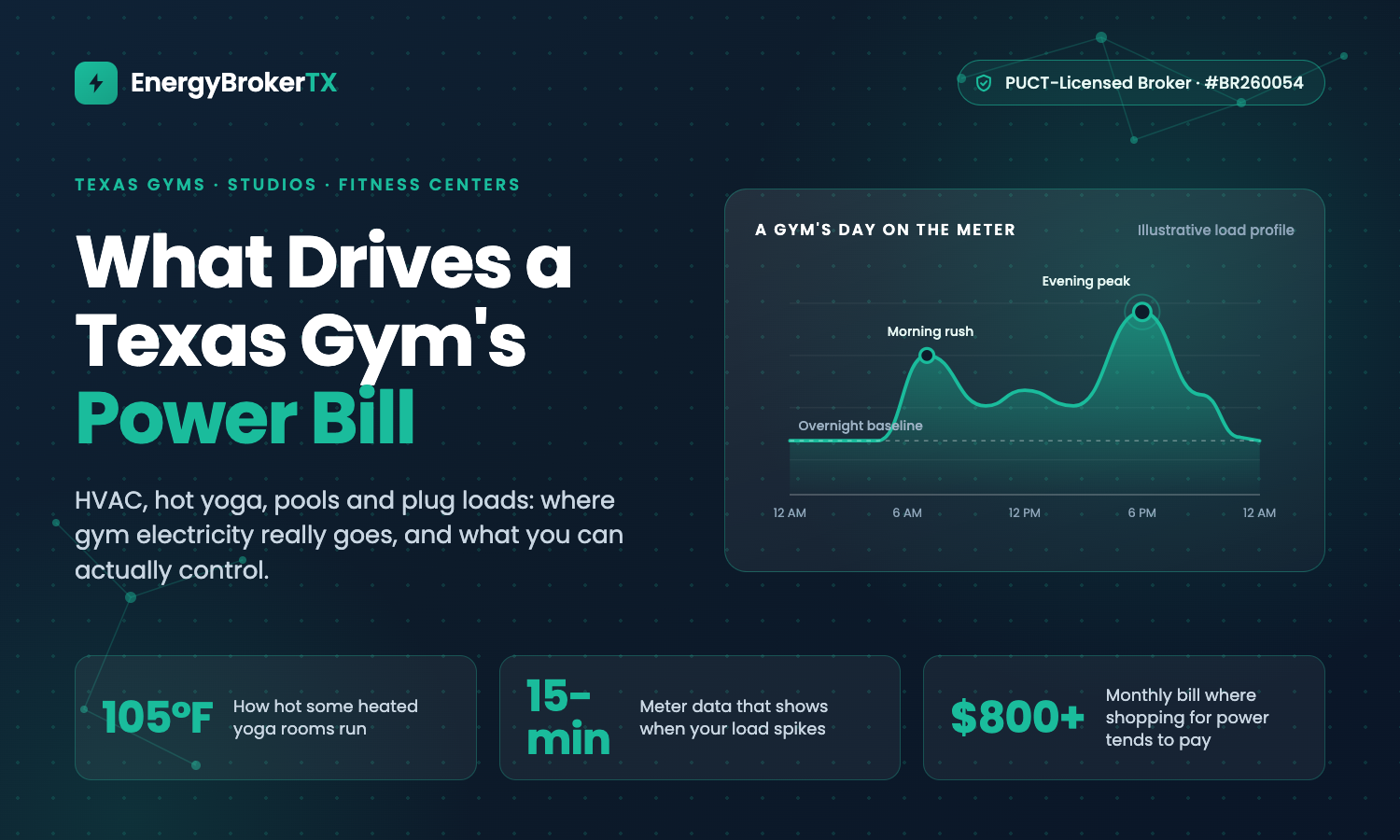
Texas Gyms, Yoga Studios and Fitness Centers: What Drives the Power Bill
What drives the power bill at Texas gyms, yoga studios and fitness centers, from HVAC and hot yoga to pools, and when shopping your rate pays off.

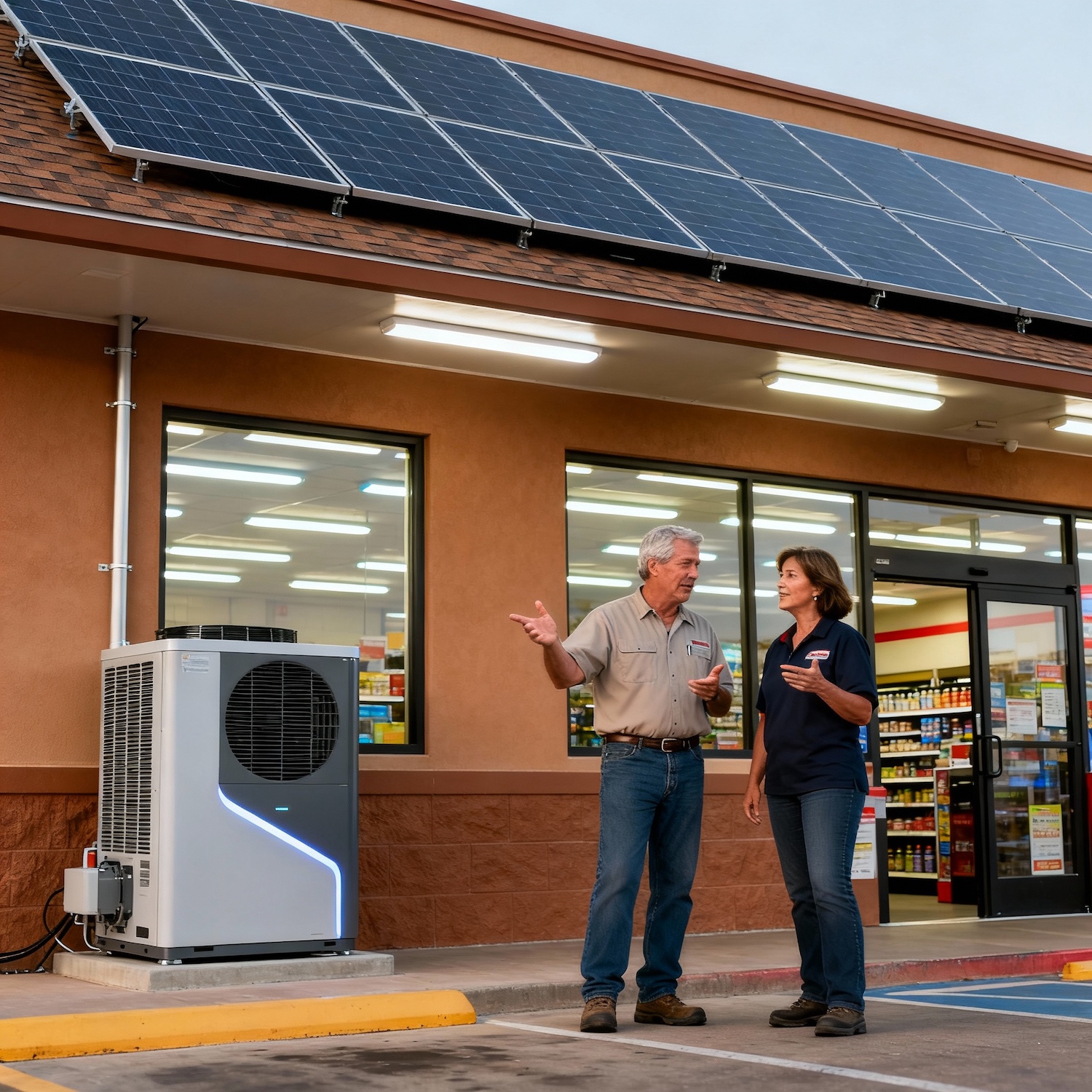
In the competitive world of Texas retail and convenience stores, every dollar counts—especially when it comes to electricity bills. With the state's deregulated energy market offering a mix of opportunities and challenges, store owners face fluctuating rates influenced by ERCOT market dynamics, extreme weather, and rising demand. According to recent data, retail spaces in Texas pay about 32% less for electricity than the national average for commercial properties, but there's still significant room for improvement. Average commercial rates hover around 15-16 cents per kWh, and for a typical 5,000-square-foot store, that can translate to monthly bills exceeding $1,000 during peak summer months.
As a Dallas-based commercial electricity broker at EnergyBrokerTX.com, we've helped numerous retail businesses—from single-location convenience stores in Frisco to multi-site chains in Houston—slash their energy costs by 15-30% through strategic procurement and efficiency measures. This comprehensive guide draws on our expertise to provide actionable steps for lowering your store's electricity expenses in 2026. We'll cover everything from partnering with an energy broker to upgrading systems and tapping into incentives, all while incorporating friendly tips to help you navigate Texas's unique energy landscape.
Whether you're dealing with high cooling demands in the Texas heat or managing 24/7 lighting for displays and coolers, implementing these strategies can boost your bottom line. Plus, with potential rate increases looming due to infrastructure investments and weather volatility (as seen in ERCOT's record-breaking demand in 2023 and 2024), acting now is crucial. Let's dive into how you can achieve real Texas retail store energy savings.
The deregulated Texas electricity market empowers businesses with choice, but navigating dozens of retail electricity providers (REPs) and contract options can be overwhelming. This is where an experienced energy broker shines. At EnergyBrokerTX.com, we act as your unbiased advocate, running reverse auctions to pit providers against each other for your business—often securing rates 15-30% lower than going direct.
Why use a broker? Consider the stats: In competitive areas, customers who switch providers report average monthly bills of $303, compared to $212 for those who stay put, highlighting the cost of inaction. Brokers like us analyze your store's historical usage data—factoring in peak hours for refrigeration, lighting, and HVAC—to recommend the best plan type: fixed-rate for stability, variable for flexibility, or hybrid for a balanced approach.
Our process is simple and fee-free (providers compensate us):
For retail stores, this means less time on admin and more focus on sales. One Frisco convenience store client saved over $5,000 annually by switching to a tailored fixed-rate plan. If you're in the Dallas area, explore our Dallas energy broker services for localized expertise. No sales calls, no obligations—just results.
In Texas's scorching summers, HVAC systems can account for up to 40-50% of a retail store's energy use, especially with constant door openings and high foot traffic. Upgrading to energy-efficient models and committing to regular maintenance isn't just smart—it's essential for lowering electricity costs.
Start with an audit: Have a professional assess your current system's efficiency rating (SEER or EER). If it's over 10 years old, consider replacing it with an ENERGY STAR-certified unit, which can reduce consumption by 6-15%. For example, a high-efficiency heat pump might qualify for rebates through local utilities like Oncor or CenterPoint Energy.
Key upgrades include:
Maintenance is equally vital: Change filters monthly, clean coils annually, and schedule bi-annual tune-ups to prevent breakdowns. A well-maintained system uses 15-25% less energy and lasts longer, avoiding costly emergencies. For hospitality-adjacent retail like cafes, check our hospitality energy savings case study for similar tips.
By optimizing HVAC, Texas store owners can see annual savings of $2,000-$5,000, depending on size—directly impacting profitability in a market where margins are thin.
Lighting isn't just about visibility—it's a major energy hog, comprising up to 17% of commercial building electricity use. In retail environments, where displays, signage, and coolers run around the clock, upgrading to LEDs is one of the quickest wins for Texas retail store energy savings.
LEDs consume 75% less energy than incandescents and last 25 times longer, reducing replacement costs. For a 2,000-square-foot store, this could mean $1,000+ in annual savings. Start by:
Beyond savings, LEDs produce less heat, easing your HVAC load by 20-30%. Many utilities offer rebates for LED retrofits—check with your provider. If you're renewing contracts, pair this with broker services to lock in rates that complement your lower usage. For more on comparing providers, see our guide to Texas commercial electricity quotes.
Your store's "envelope"—walls, roof, windows, and doors—is the first line of defense against Texas's extreme heat and occasional cold snaps. Poor sealing leads to energy leaks, inflating bills by 10-20%. Optimizing it is a cost-effective way to achieve sustainable savings.
Practical steps:
These improvements often have payback periods of 2-5 years. For multi-site operators, consider a phased approach.
In 2026, federal and state incentives for energy efficiency are in flux, with several expiring mid-year. Act fast to maximize Texas retail store energy savings through these programs.
Key opportunities:
Consult a tax advisor or CPA to stack incentives. For example, a $50,000 LED/HVAC retrofit could yield $10,000+ in credits. Our brokers can guide you on usage impacts—explore Houston-specific benefits if applicable.
Beyond big upgrades, small habits compound into big savings. Invest in energy management systems (EMS) to monitor real-time usage—tools like smart meters can identify spikes, potentially saving 5-15%.
Bonus tips:
For car washes or laundromats with high water/energy overlap, consider reading our car wash cost reduction guide.
In 2026, renewables offer volatility protection. Texas leads in wind and solar, with wholesale prices often dipping below 10¢/kWh. For retail stores, options include:
Lowering electricity costs for your Texas retail or convenience store isn't just about survival—it's about thriving in a dynamic market. By partnering with EnergyBrokerTX.com, upgrading systems, and claiming incentives, you can achieve 20-40% savings while enhancing sustainability. Don't wait for rates to rise—get a free quote today and start your reverse auction. With our PUC-licensed expertise (BR260054), we're here to power your success. Contact us at sales@energybrokertx.com or visit our blog for more guides.
Submit your account and we'll run a competitive auction with 25+ licensed Texas providers — full bid transparency, no pre-filtering, no obligation.
Get My Free Competing Bids →