
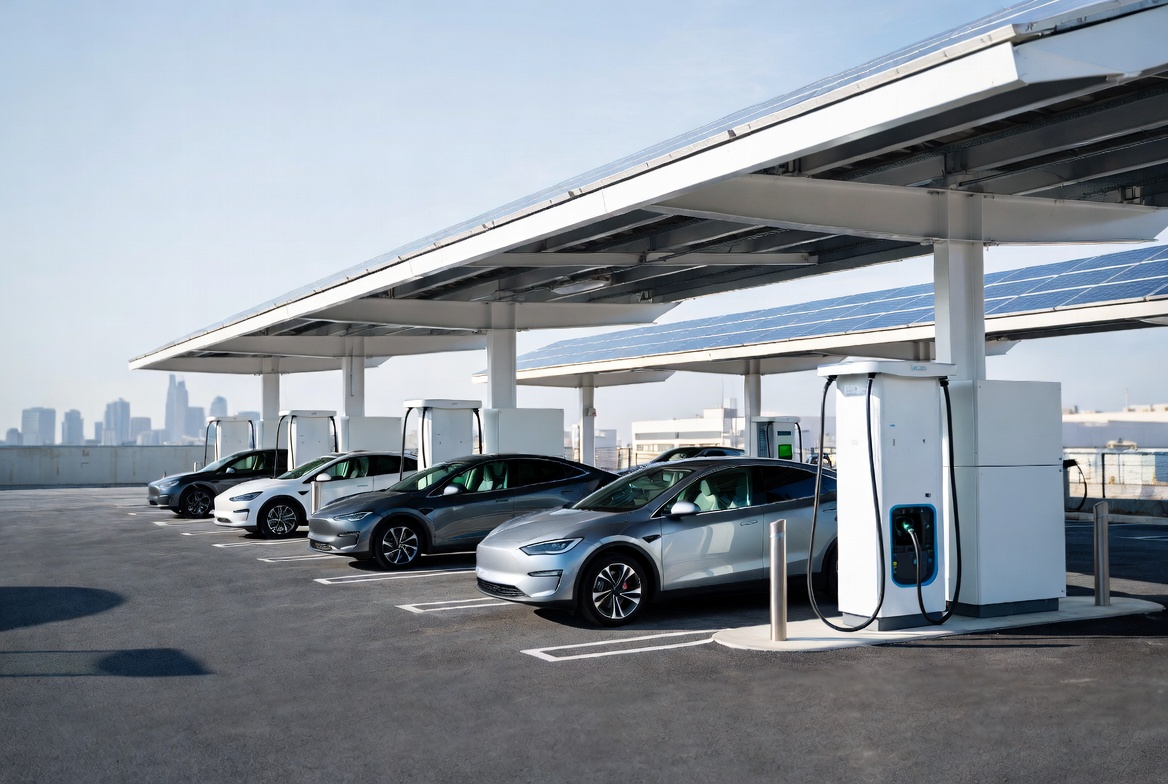
How to avoid costly ERCOT demand charges on Texas EV charging stations in 2026. Practical strategies to reduce EV charger power costs, manage peaks, use TOU plans, battery storage & more from a PUC-licensed energy broker.
Read More ->EV Charging Strategies


How Texas businesses can reduce EV charging station electricity costs by 20–40% in 2026. Practical strategies for demand charges, TOU plans, behind-the-meter power, rebates & more from a PUC-licensed Texas energy broker.
Read More ->EV Charging Strategies
Frequently Asked Questions
Plan for scale now. Lock in a flexible, longer-term electricity contract before your demand grows, design your electrical infrastructure with future expansion in mind, and choose a supplier that won’t penalize you for increased usage. Early planning can save tens of thousands in avoided rate hikes. EnergyBrokerTX can run multi-year usage forecasts and secure the most competitive rates for your growth trajectory.
Demand charges are frequently the largest single line item on commercial electricity bills once EV chargers are added. They are calculated by the utility (Oncor, CenterPoint, AEP Texas, etc.) based on your highest 15-minute peak demand (in kW) during the billing month — and in Texas, they are often heavily influenced by your four highest summer peaks (4CP). Because multiple EVs charging simultaneously can create sharp spikes in power draw, even a modest fleet can dramatically increase your monthly demand charges. Without proper management, demand charges can represent 30–70% of the total electricity cost for EV charging.
Yes — charging during off-peak hours (typically nights and weekends) is one of the fastest ways to cut costs in Texas. You’ll pay lower per-kWh rates and, more importantly, avoid expensive on-peak demand charges. Proper scheduling and smart chargers can reduce your effective cost per mile by 30–50%. We’ll model your load profile and recommend the optimal charging windows.
For commercial EV charging, fixed-rate or time-of-use (TOU) plans with low off-peak kWh rates and favorable demand-charge structures usually deliver the biggest savings. Real-time pricing can work well if you have advanced scheduling systems, but most fleets do better with predictable fixed rates. We shop every competitive Texas supplier to find the plan that matches your exact charging profile.
Adding EV chargers can increase your monthly bill by 20–60%+ if not managed properly, mainly due to higher demand charges from simultaneous fast-charging sessions. With the right rate plan and load management, most Texas businesses keep the added cost under 15–25%. Our team runs a full bill-impact analysis before you install so there are no surprises.
Our Data Sources & Methodology
Blogs are informed by real-time ERCOT data and PUC guidelines as of March 2026. We update content regularly for relevance.
Ready to Stop Overpaying?
saving thousands every year with our free reverse auction.