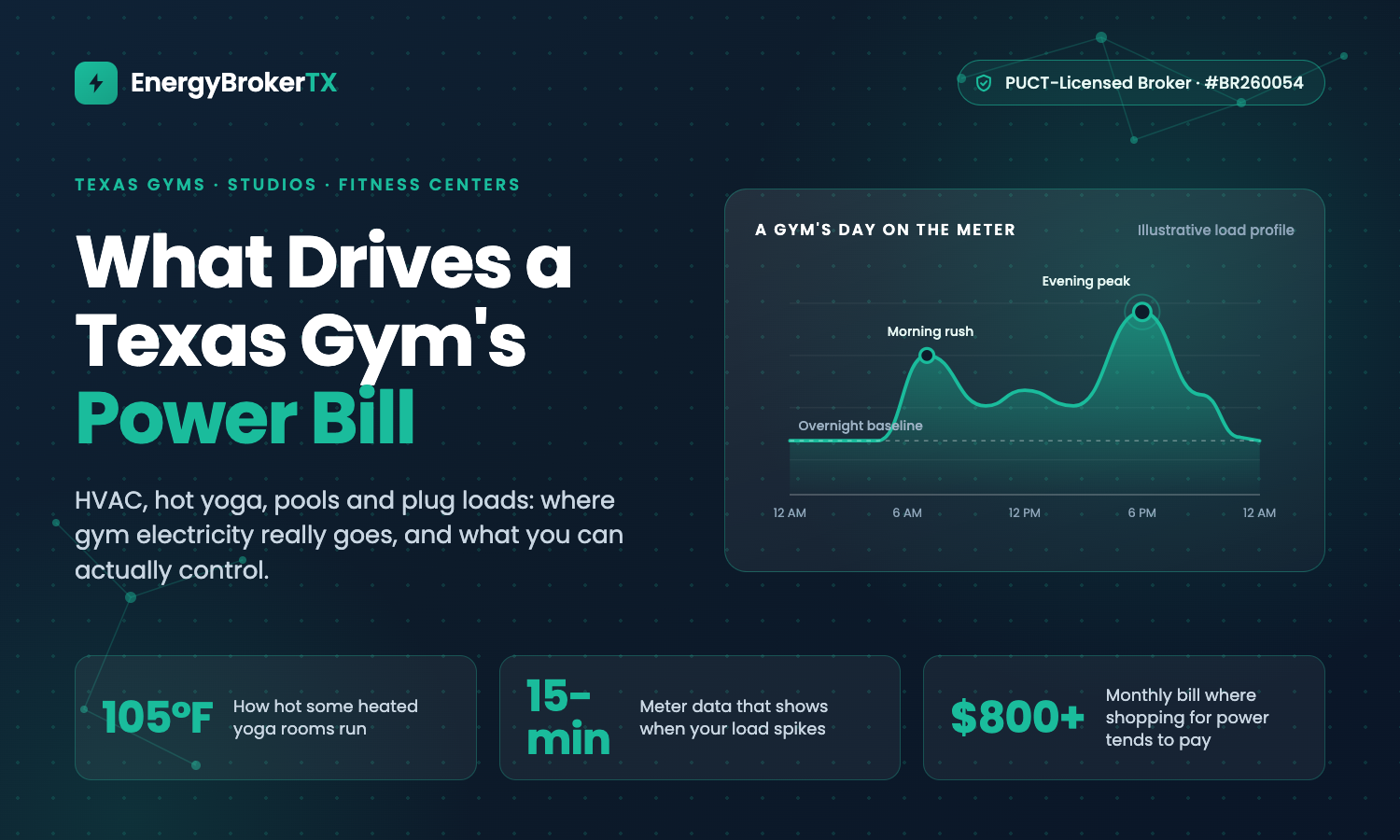
Texas Gyms, Yoga Studios and Fitness Centers: What Drives the Power Bill
What drives the power bill at Texas gyms, yoga studios and fitness centers, from HVAC and hot yoga to pools, and when shopping your rate pays off.

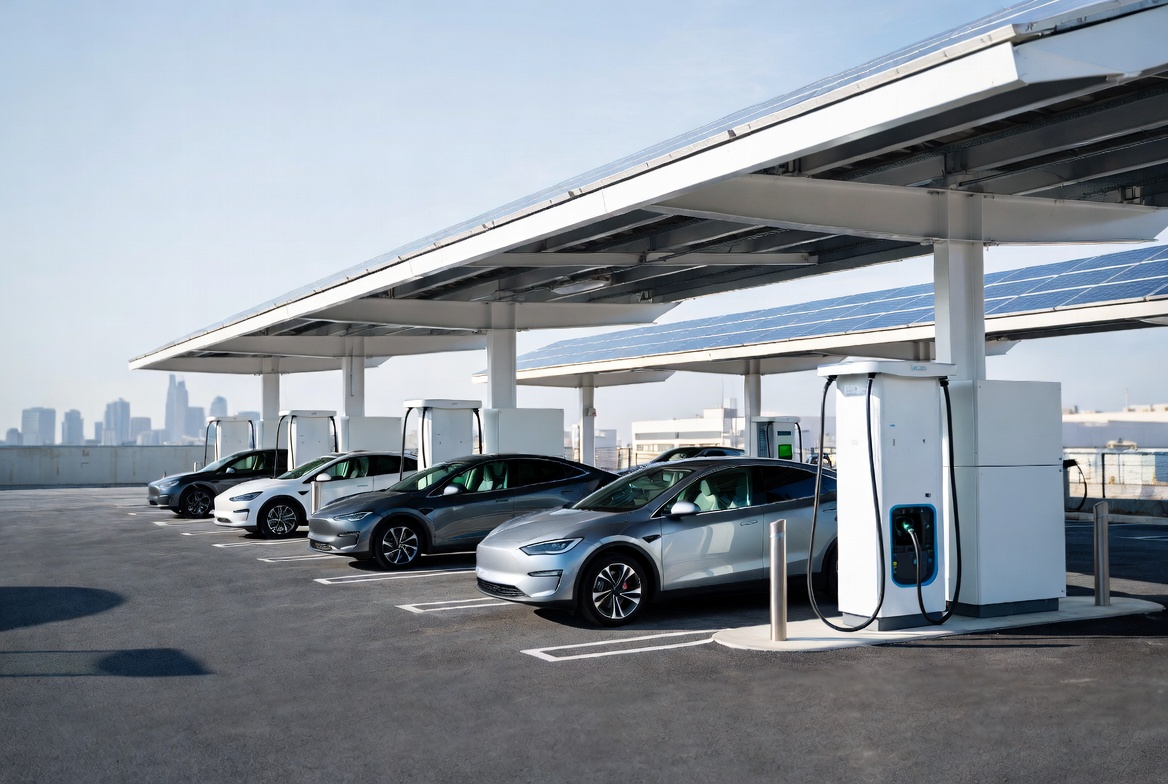
The rapid growth of electric vehicles in Texas is creating a massive new opportunity — and a significant new cost center — for businesses. From retail parking lots and multifamily complexes to fleet operators and commercial real estate developers, EV charging stations are popping up everywhere. But many owners are shocked when the first electricity bills arrive.
High demand charges, time-of-use pricing, and 24/7 operation can make commercial EV charging stations surprisingly expensive to run. The good news? In Texas's deregulated energy market, businesses have more tools than ever to control these costs.
At Energy Broker TX (PUC License # BR260054), we've helped several early EV charging operators and fleet managers in Dallas, Houston, Arlington, and Corpus Christi reduce their electricity costs by 20–40% in 2025–2026. These savings didn't come from cutting corners on service — they came from smart procurement, load management, and taking full advantage of incentives.
This complete guide walks you through the most effective strategies working right now for commercial EV charging stations in Texas.
The fastest way to lower Texas EV charging station electricity costs 2026 is to stop accepting the first quote you receive and instead force suppliers to compete.
A properly run reverse auction lets 25+ retail electricity providers bid on your exact load profile — including the high peaks created by simultaneous charging sessions. Because we can share your willingness to curtail or shift load, suppliers can offer more aggressive pricing, including favorable demand riders on the contract itself. Suppliers are far more willing to discount demand charges specifically when they know a site is actively managing its peaks through technology and scheduling, rather than treating the number as fixed and unavoidable.
We recently helped a large multifamily property in Frisco with 60 Level 2 chargers drop their all-in rate from 14.8¢/kWh to 9.7¢/kWh. That single move is projected to save them over $47,000 in the first year alone. In a separate auction for a fleet charging depot in Houston, a custom rate structure with reduced demand ratchets saved the operator over $68,000 in its first year — fleet depots often see even larger gains than retail or multifamily sites, since overnight charging schedules give suppliers more predictable load to price against.
Action steps:
For more details on timing, see our guide on contract renewal and switching.
Demand charges (based on your highest 15-minute peak) often account for 40–60% of an EV charging station's bill. A few busy hours in the afternoon can trigger massive charges for the entire month. Unmanaged EV charging sites frequently record peaks 2.5–4 times higher than their average baseline load — and that single 15-minute spike, not your total monthly usage, is what the utility uses to calculate demand charges for the next 30 days.
Proven tactics that work in 2026:
One Houston retail center we worked with reduced their peak demand by 34% using intelligent load balancing and saved over $62,000 annually on demand charges.
For a deeper dive into reading and optimizing your bill, check our commercial bill analysis & savings guide.
ERCOT's time-of-use pricing creates big opportunities for EV charging operators who can be flexible.
Off-peak rates (typically nights and weekends) are often 30–50% lower than on-peak. By encouraging customers to charge during these windows and automating station behavior, you can dramatically lower your average cost per kWh.
According to the U.S. Department of Energy, businesses using optimized TOU plans for EV infrastructure can achieve 15–25% additional savings on top of base rate reductions.
Practical implementation:
Many forward-thinking operators are moving part of their EV charging load behind the meter using solar, battery storage, or natural gas generation.
This approach not only reduces exposure to high grid rates and demand charges but also provides backup power during outages — a major selling point for multifamily and retail locations.
Deloitte's 2026 energy outlook notes that behind-the-meter solutions paired with EV charging are growing rapidly in Texas due to high demand charges and improving battery economics.
We helped a Dallas-area shopping center install a 500 kW solar + battery system that now supplies nearly 40% of their EV charging energy at a blended cost under 5¢/kWh. In a similar project, a Plano retail center installed a 400 kWh battery system to handle afternoon peaks specifically; demand charges dropped 38%, and the project qualified for both utility rebates and federal tax credits.
Texas and federal programs are offering substantial incentives for commercial EV charging infrastructure in 2026.
Key programs to pursue:
A McKinsey report from late 2025 estimates that stacking incentives can cover 30–50% of total project costs for many commercial EV charging deployments.
Make sure your energy broker helps you model these incentives into your overall electricity strategy from day one.
Not all electricity contracts are created equal for EV charging stations. Fixed-rate, time-of-use, and hybrid structures each have their place.
Hybrid contracts (part fixed for baseline load, part indexed or TOU for flexibility) have delivered the best results for most of our EV charging clients in 2025–2026. They provide price certainty while still allowing you to benefit from lower overnight pricing and curtailment credits.
How expensive is electricity for commercial EV charging stations in Texas in 2026? All-in costs typically range from 11–18¢/kWh depending on location, demand charges, and contract type. Well-optimized stations are achieving under 9¢/kWh.
What is the biggest cost driver for EV charging stations? Demand charges — they can represent 40–60% of the total bill if not actively managed.
Can EV charging stations participate in ERCOT demand response programs? Yes. Smart charging software allows stations to reduce load during peak events while still meeting customer needs.
Are there specific rebates for EV charging in Texas? Yes — utility rebates from Oncor, CenterPoint, and AEP, plus federal and state grant programs.
Should I use a broker for my EV charging electricity? For any station with significant load, a licensed Texas energy broker can deliver better rates and help design the optimal contract structure.
How long does it take to see savings? Most clients see meaningful savings within 30–60 days of switching contracts, with full optimization (including demand management and incentives) delivering results within 3–6 months.
Ready to Lower Your EV Charging Station Electricity Costs? Texas businesses don't have to accept high power bills as the price of supporting electric vehicles. With the right combination of competitive procurement, smart load management, behind-the-meter solutions, and available incentives, many operators are cutting costs by 20–40% while delivering excellent charging experiences.
At Energy Broker TX, we specialize in helping businesses with EV charging infrastructure navigate the Texas energy market. Our PUC-licensed team (BR260054) will analyze your load, run a free reverse auction, and design a complete energy strategy tailored to your charging stations.
Visit our contact page today to request a free savings analysis. It takes less than 60 seconds, and you'll receive personalized insights with no obligation.
Submit your account and we'll run a competitive auction with 25+ licensed Texas providers — full bid transparency, no pre-filtering, no obligation.
Get My Free Competing Bids →