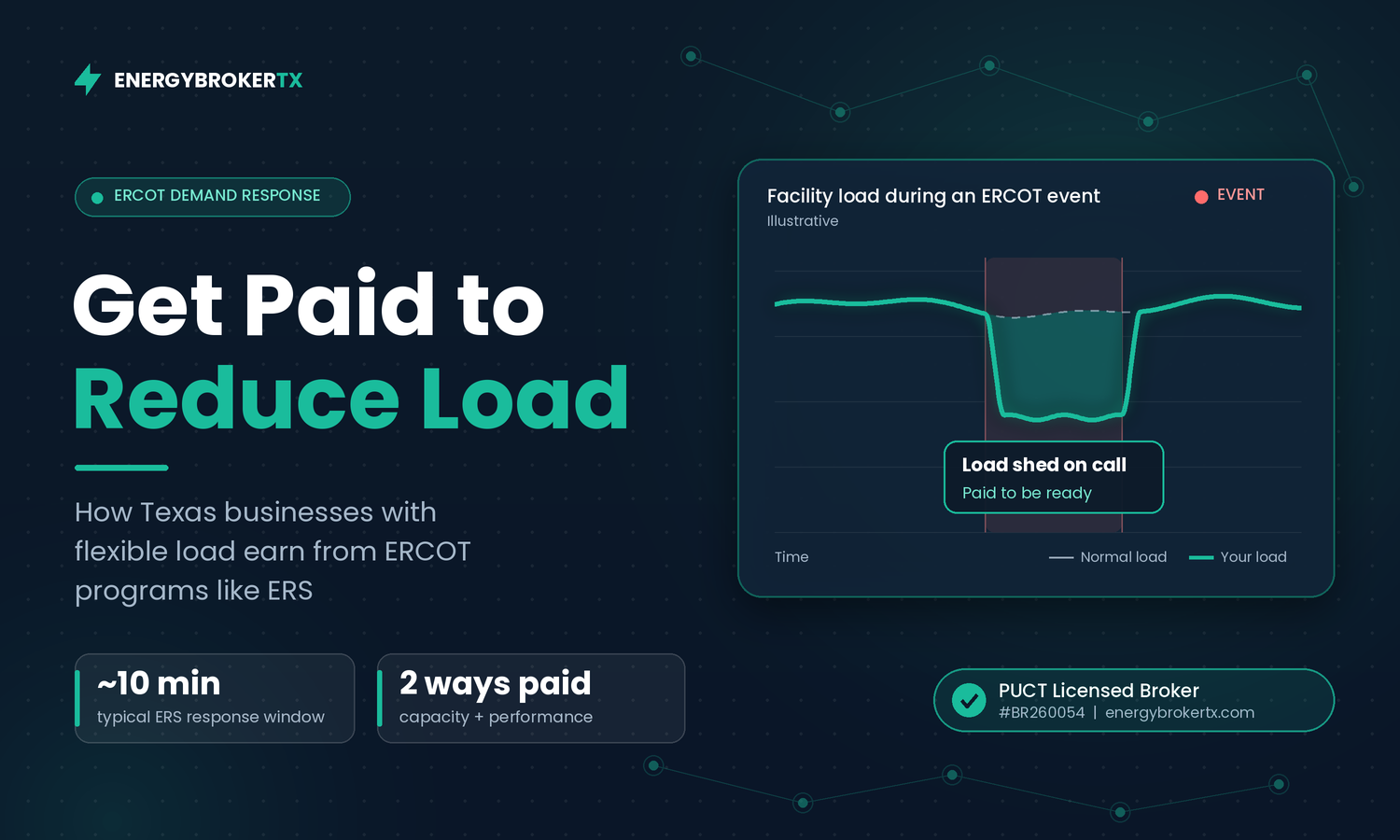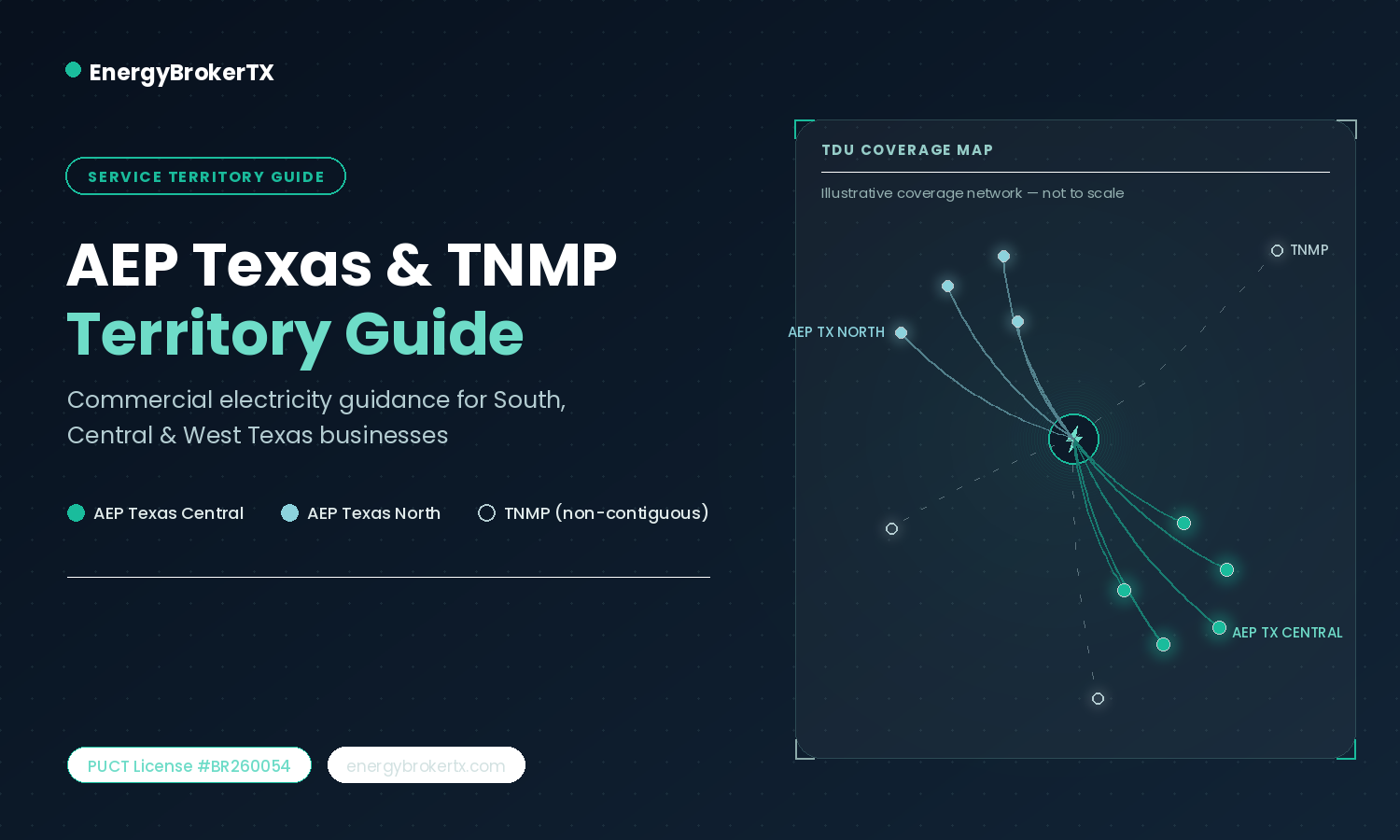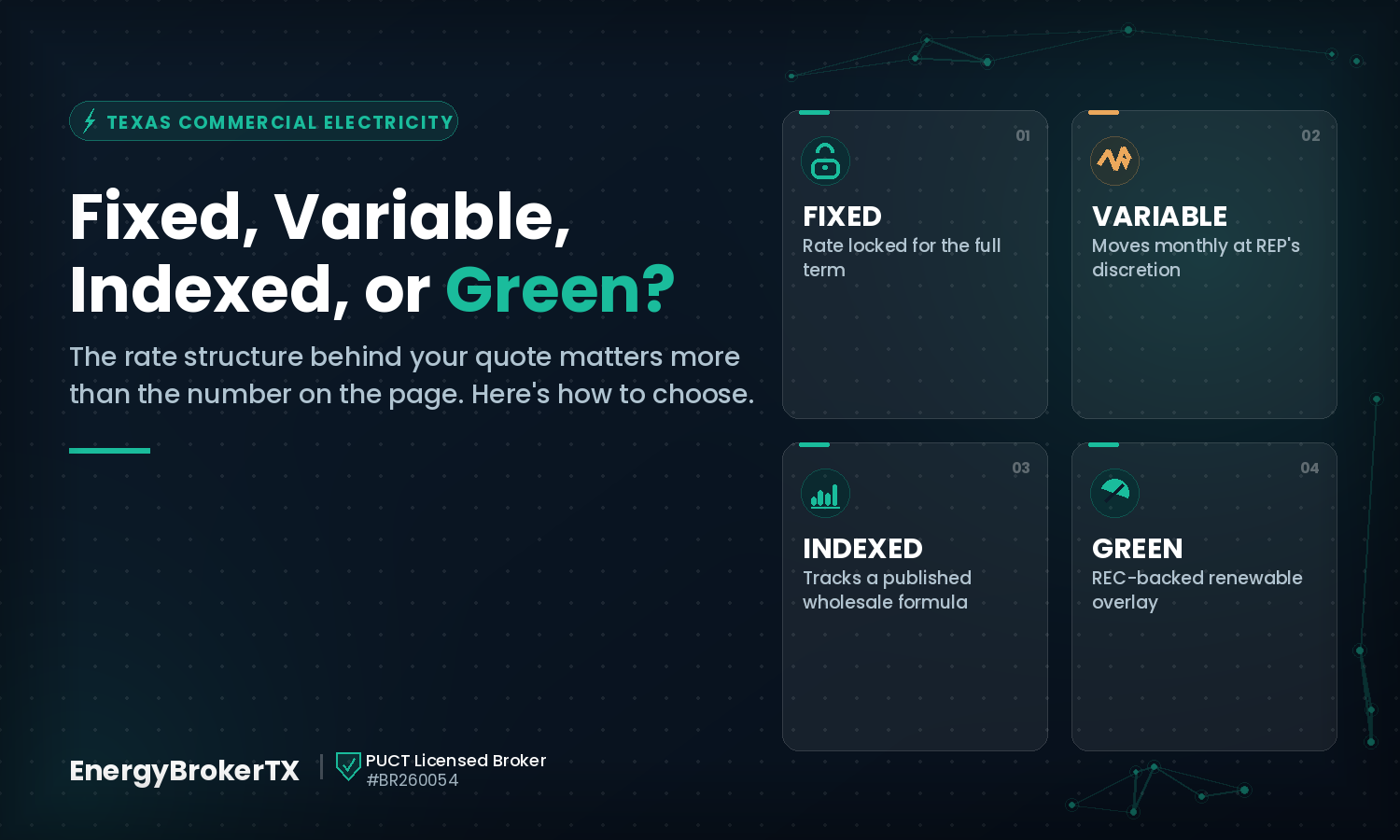

How Texas farms, ranches, and agribusiness operations can cut electricity costs on irrigation, grain storage, and cold storage — plus a tax exemption most miss.
Read More ->Blogs for Texas Deregulation Explained
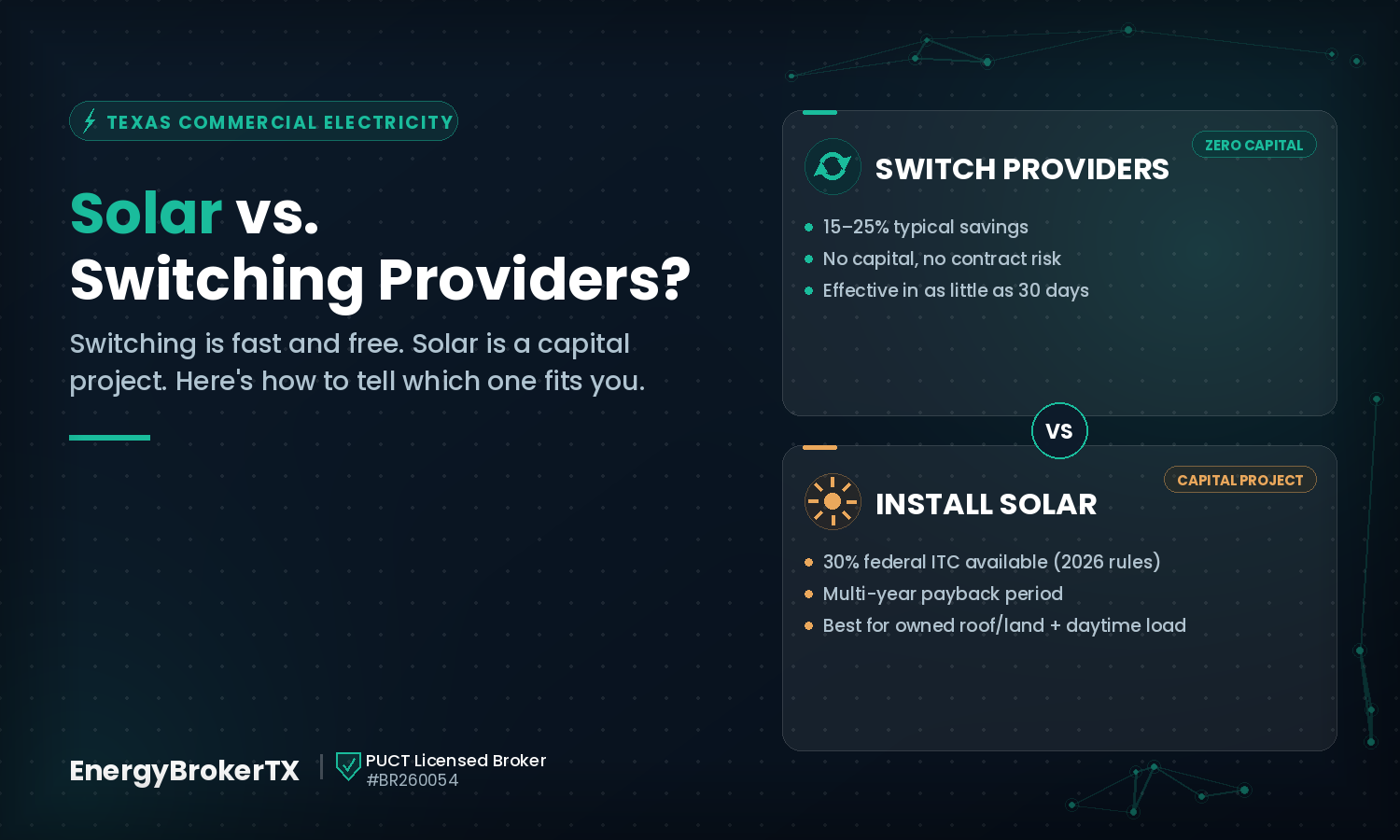

Data center load growth in ERCOT is reversing 3 years of falling commercial electricity prices. Here's what it means for your contract — and what to do now.
Read More ->
Winter Storm Uri spiked wholesale prices to the price cap for days. See why fixed-rate contracts matter most in winter, and how to check your exposure.
Read More ->
Austin Energy and most surrounding co-ops are regulated — no provider choice. But some Central Texas addresses are deregulated. Here's how to check yours in 3 minutes.
Read More ->
A step-by-step guide to switching commercial electricity providers in Texas — what to check, when to act, and how to avoid the most costly mistakes.
Read More ->
How green electricity works in Texas's deregulated market — what RECs, bundled contracts, and PPAs actually cost, and when a green plan makes sense.
Read More ->Blogs for Texas Deregulation Explained
Frequently Asked Questions
The biggest advantages include: Lower rates — competition drives prices down (average Texas commercial rates are ~35% below national averages). Plan flexibility — choose fixed rates for stability, variable for potential savings, or green/renewable plans for ESG goals. Savings potential — many businesses save 15–30% (or more) by switching providers or using a reverse auction. No service change — the same wires deliver power; only the supplier changes. Our free reverse auction simplifies the process so you get the best deal without hours of research.
Yes—switching is safe, regulated, and usually seamless: The Public Utility Commission of Texas (PUCT) oversees the market and protects consumers. Switching takes minutes online or with broker help—no wiring changes, no downtime. Most plans allow early termination with small fees (we help minimize or avoid these). Use a licensed broker like EnergyBrokerTx (PUCT-registered) to compare 25+ providers and run a free reverse auction—zero cost to you, full transparency, and results in 24 hours. Thousands of Texas businesses switch every year without issues.
Check your current electric bill: look for the retail provider name (e.g., TXU, Reliant, Gexa) separate from the delivery company (e.g., Oncor, CenterPoint). If you see a retail provider listed, you’re deregulated and can switch. You can also enter your ZIP code on our site or call us—we’ll instantly confirm your status and run a free rate comparison. Most businesses in major Texas cities and suburbs are deregulated and eligible for competitive savings.
Texas is mostly deregulated within the ERCOT grid, covering major metro areas like Dallas, Houston, Fort Worth, Austin suburbs, San Antonio suburbs, Corpus Christi, Midland, Lubbock, Waco, and much of Central, North, East, and South Texas. However, some cities remain regulated: Core Austin (Austin Energy) Core San Antonio (CPS Energy) El Paso (El Paso Electric), and a few rural co-ops and municipal utilities. If your address is in a deregulated area, you can choose providers and use tools like our free reverse auction to get the lowest rates.
In most of Texas (the ERCOT grid area), electricity is deregulated, meaning you can choose your retail electricity provider instead of being forced to buy from a single utility company. The utility (e.g., Oncor, CenterPoint, AEP Texas, Xcel Energy) still owns the power lines and delivers electricity, but competitive retail providers supply the power and set the rates. About 85% of Texans live in deregulated areas and can shop for better prices, plans, and terms—potentially saving 15–30% compared to default or legacy rates.
Our Data Sources & Methodology
Blogs are informed by real-time ERCOT data and PUC guidelines as of July 2026. We update content regularly for relevance.
Ready to Stop Overpaying?
saving thousands every year with our free reverse auction.