July 26, 2026
Texas Commercial Electricity Rates by Industry: 2026 Benchmark Guide
What competitive Texas commercial electricity rates look like by industry in 2026 — restaurants, manufacturing, healthcare, data centers, and more.
Read More ->

What competitive Texas commercial electricity rates look like by industry in 2026 — restaurants, manufacturing, healthcare, data centers, and more.
Read More ->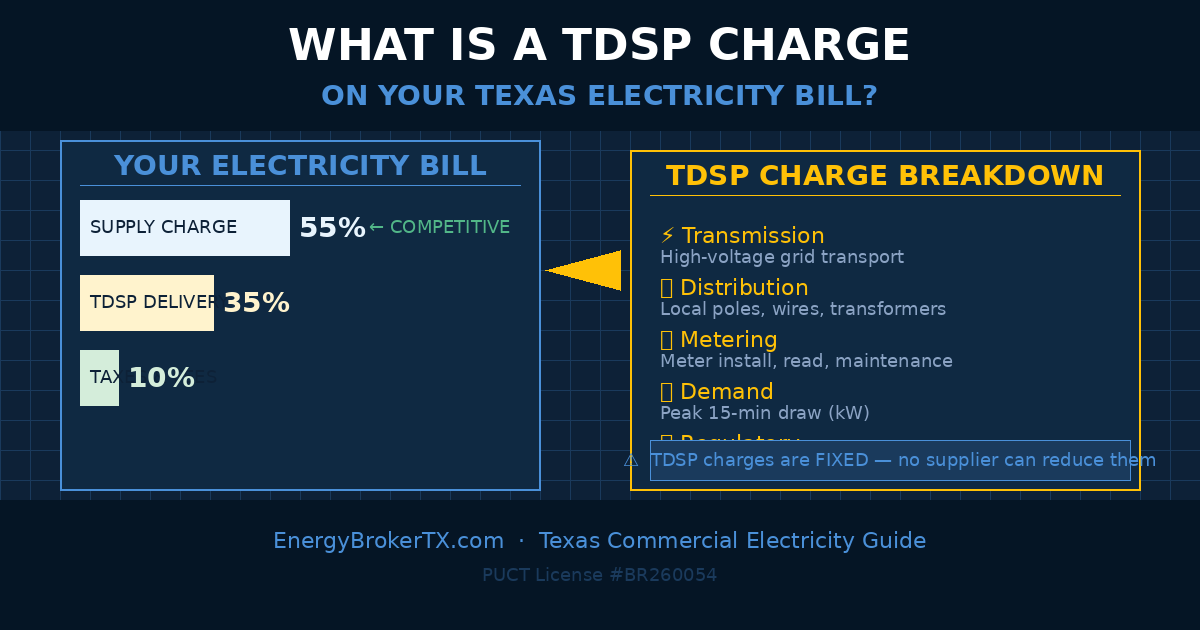
TDSP charges are the regulated delivery fee on every Texas commercial electricity bill. Here's what they cover and how to factor them in.
Read More ->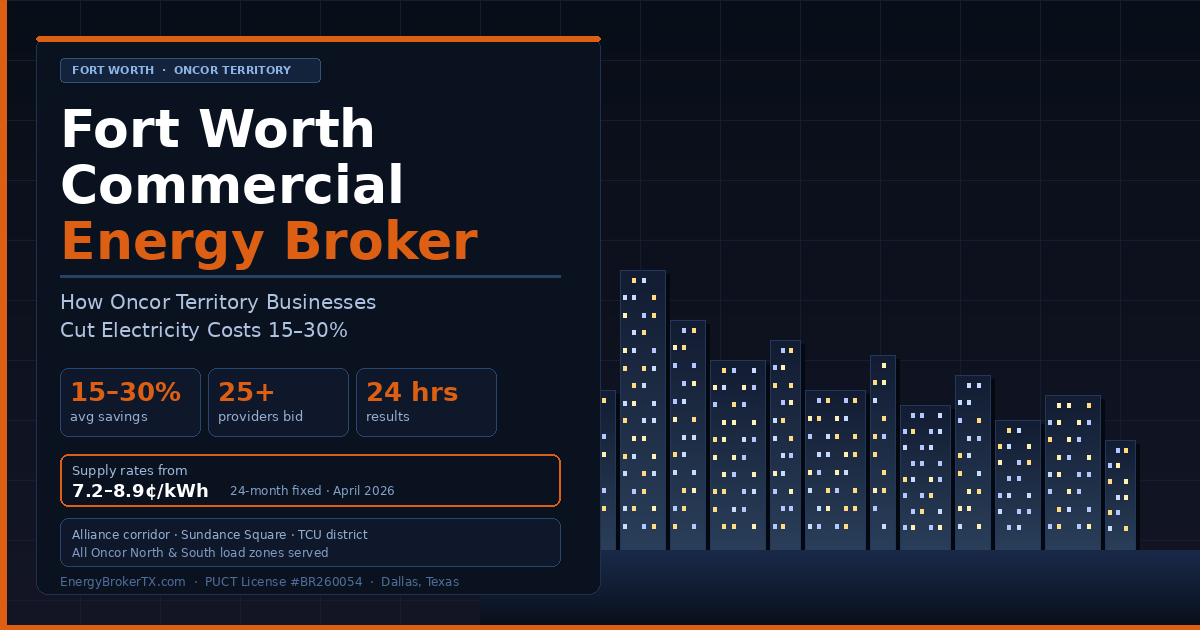
Fort Worth businesses in Oncor territory overpay 15–25% through passive renewals. Here's what Near Southside and Alliance corridor businesses should pay.
Read More ->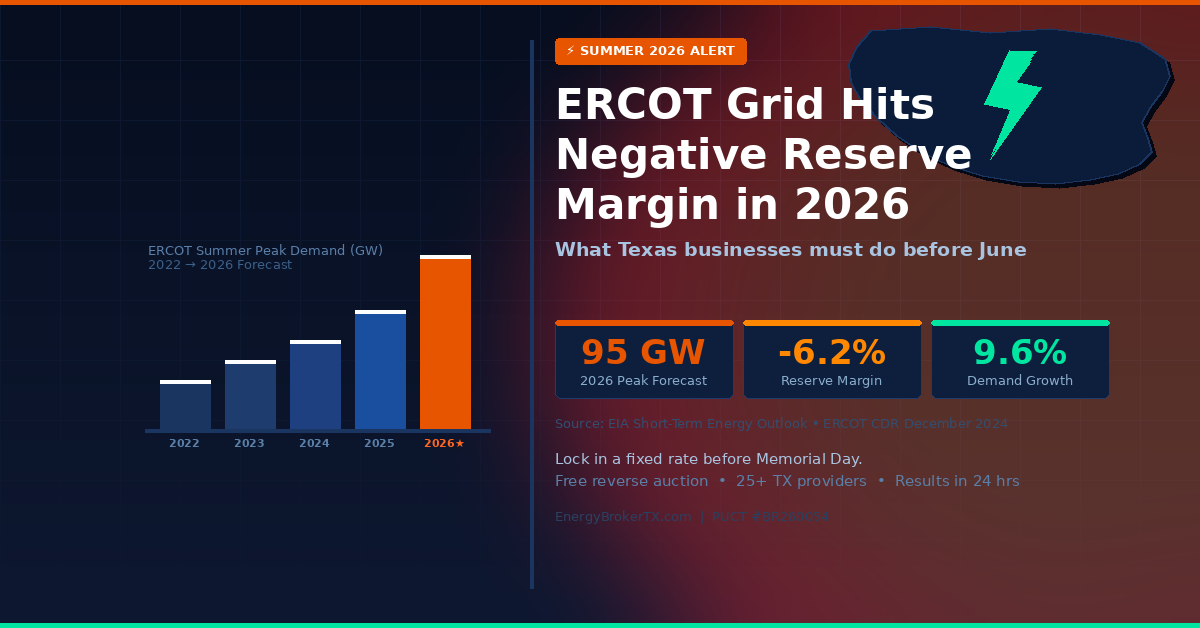
Four summer demand peaks quietly set your transmission costs for all of next year. Here's how large Texas businesses lower that bill before the September window closes.
Read More ->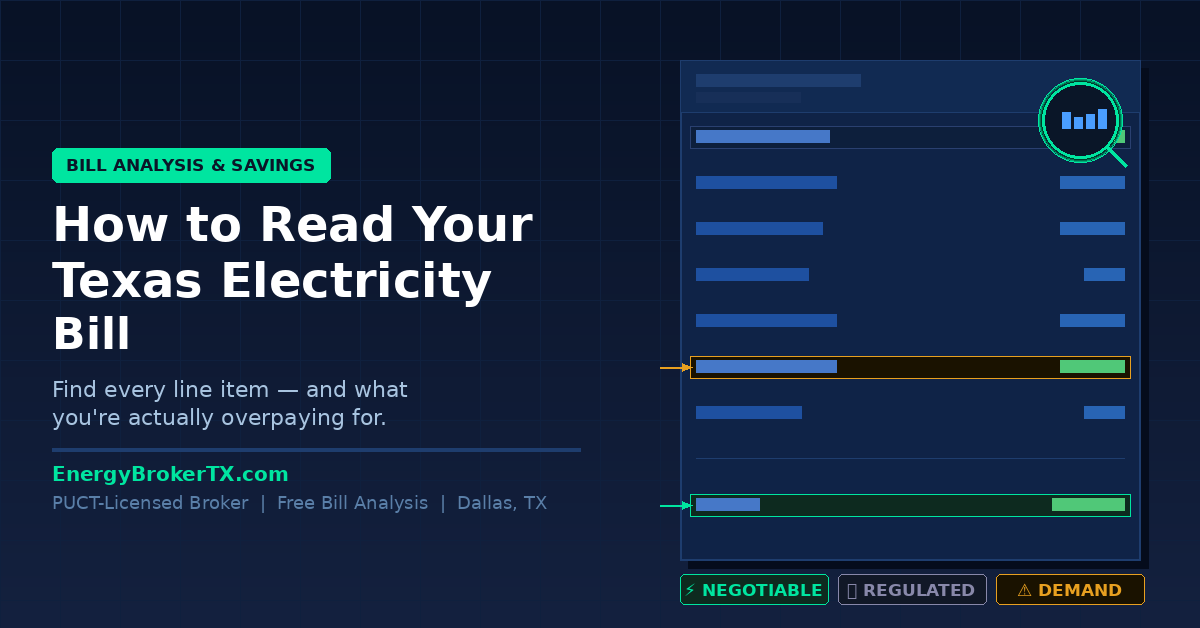
Texas commercial electricity bill explained: every line item decoded — TDSP fees, demand charges, and exactly what you can and cannot negotiate.
Read More ->
Texas commercial electricity rates run 15–25% below the national average — but most accounts still overpay. Here's the full rate structure explained.
Read More ->Absolutely—for bills over $1,000/month, audits uncover 10-20% savings through fee disputes or plan optimizations. At Energy Broker TX, our free reviews demystify deregulated bills and connect you to better rates via reverse auctions. Ready to check yours? Get a no-obligation analysis today.
Demand charges bill your highest 15-minute peak (in kW), funding grid capacity. Shift loads to off-peak hours (e.g., evenings) or install sub-meters to monitor. Efficiency upgrades like variable-speed motors cut peaks by 15-25%; explore demand response programs for credits during ERCOT highs.
Contact your provider immediately for a reread or correction—PUC rules require responses within 10 days. Common errors include wrong meter reads or unapplied credits. Document everything; if unresolved, file a free PUC complaint. Regular audits prevent recurrence, potentially saving 5-15% annually.
Hidden fees like demand charges (based on peak usage), transmission surcharges, and minimum usage penalties can add 20-40% to your bill. Demand charges alone often surprise businesses with high-load operations—review your kWh vs. kW breakdown to spot them. A quick audit can reveal overcharges; start by comparing your rate to ERCOT averages for savings.
Blogs are informed by real-time ERCOT data and PUC guidelines as of July 2026. We update content regularly for relevance.

We'll show you what 25+ Texas providers would charge — free, no calls required, results in 24 hours.
✓ PUCT Licensed #BR260054 ✓ Zero fees ✓ No obligation
I'll personally reach out within 24 hours with competing quotes from across the Texas market.