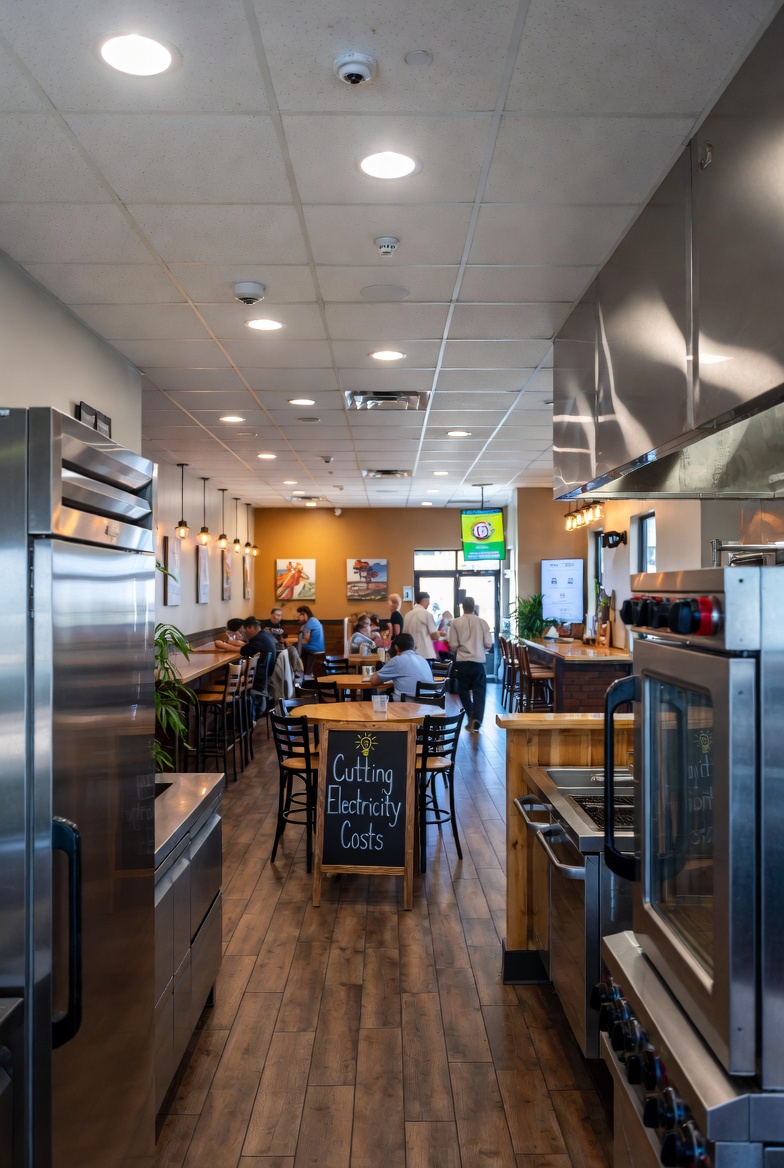
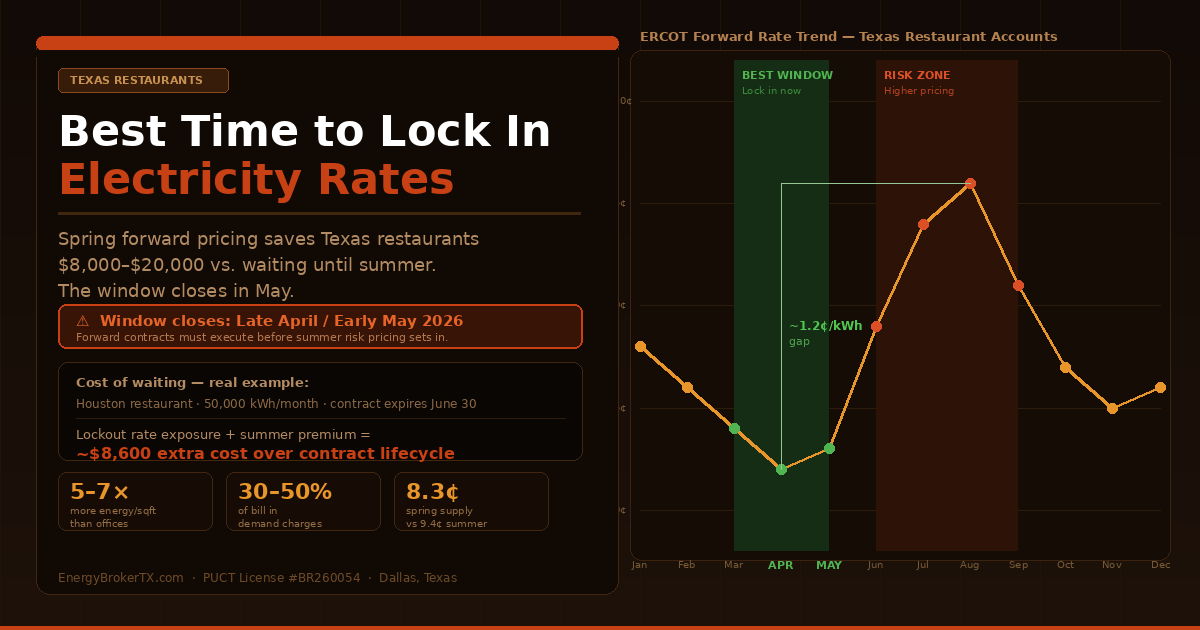
How Texas restaurants can reduce commercial electricity costs 15–30% in 2026. Proven strategies for kitchens, HVAC, lighting, demand charges & more from a PUC-licensed broker.
Read More ->Blogs for Restaurants


Discover how restaurants and hotels in Texas save on electricity with expert energy broker strategies. See real Fort Worth case study results—cut costs in Houston, Dallas, Austin, and more.
Read More ->
In the competitive landscape of the restaurant and bar industry, managing energy costs is crucial for maintaining profitability. Understanding energy consumption patterns can lead to significant savings and improved operational efficiency.
Read More ->Blogs for Restaurants
Frequently Asked Questions
emand charges are based on your peak kW usage (highest power draw in a 15-30 minute interval) and can add 30-50% (or more) to bills for restaurants with heavy kitchen equipment, ovens, fryers, and AC running simultaneously. In Texas' deregulated market, these are pass-through TDU fees (Oncor/CenterPoint).
There is virtually no interruption when switching providers correctly. We coordinate the transfer date with your current supplier and the TDU (Oncor in DFW, CenterPoint in Houston, etc.) so the switch occurs at a meter read—usually midnight on the effective date. Most restaurants experience zero downtime. We handle all paperwork, verify ESIDs, and confirm seamless handoff so your kitchen, lights, and refrigeration stay online without missing a beat.
Switching is simple and seamless in Texas' deregulated market—no downtime if handled properly, and we coordinate with your TDU (Oncor, CenterPoint, etc.) for accurate meter reads. Check for early termination fees on your current contract, but most switches incur no cost to you. We manage the process end-to-end, often with faster results via our auction—many restaurants save 10-30% on bills by shopping competitive quotes in just 24 hours.
Fixed-rate plans lock in 7-9¢/kWh for 12-36 months, providing budget certainty against ERCOT volatility and Texas summer peaks—ideal for restaurants with predictable high usage from cooking and cooling. Variable rates can dip lower (under 8¢/kWh) in mild months but risk spikes during heat waves or high-demand periods. Most restaurant owners prefer fixed for stability; run our free auction to compare both options customized to your kitchen load.
Our Data Sources & Methodology
Blogs are informed by real-time ERCOT data and PUC guidelines as of March 2026. We update content regularly for relevance.
Ready to Stop Overpaying?
saving thousands every year with our free reverse auction.