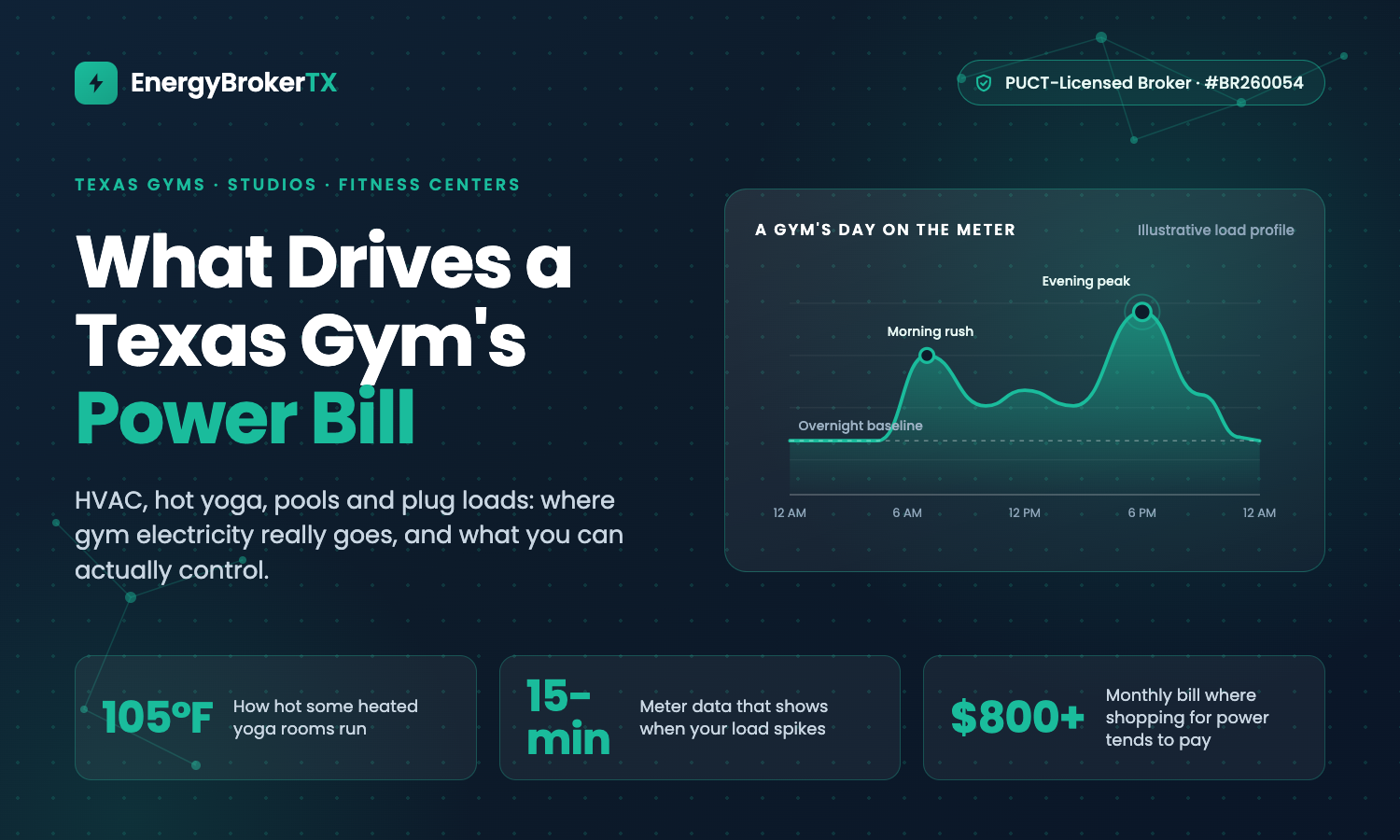
Texas Gyms, Yoga Studios and Fitness Centers: What Drives the Power Bill
What drives the power bill at Texas gyms, yoga studios and fitness centers, from HVAC and hot yoga to pools, and when shopping your rate pays off.

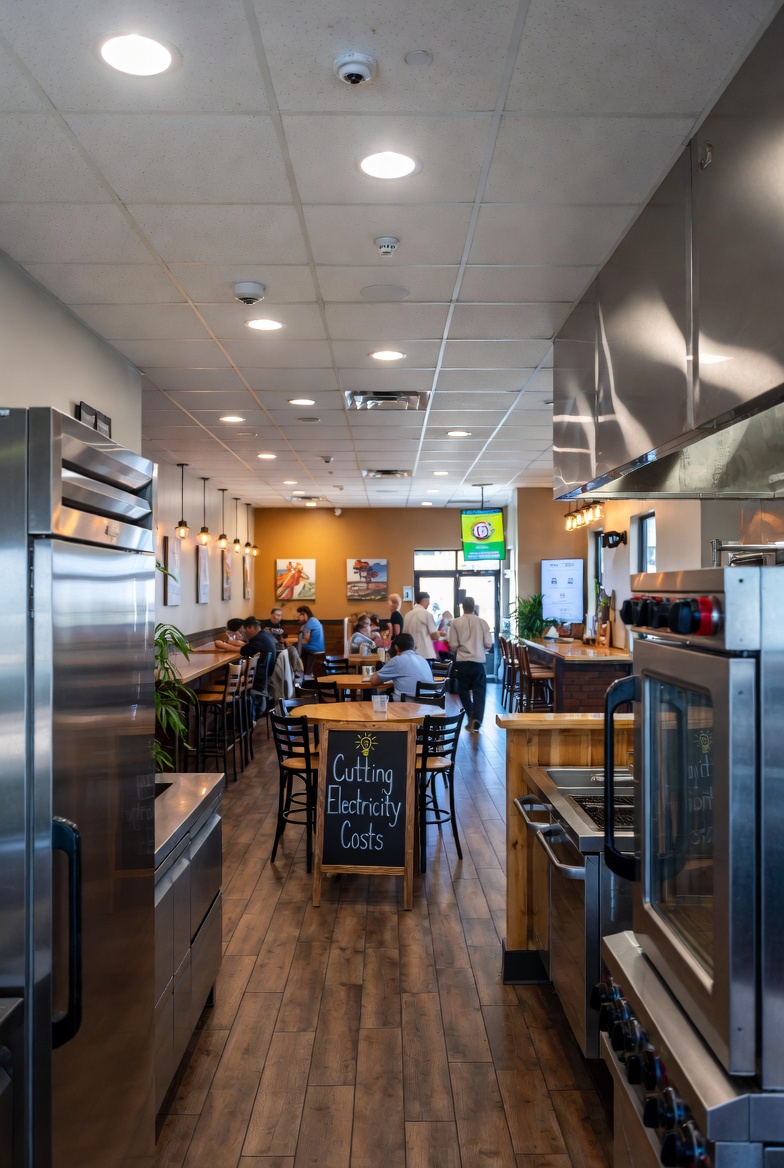
Texas restaurants face some of the toughest energy economics in the country. Kitchens run hot, exhaust fans never stop, walk-in coolers hum 24/7, and dining rooms stay comfortable even when it’s 100° outside. Add in fluctuating wholesale prices and ERCOT demand spikes, and electricity can easily become one of your largest controllable operating expenses.
The good news: in Texas’s deregulated market, restaurants have more leverage than most realize. With the right approach, many operators are cutting commercial electricity rates by 15–30% without changing menus, hours, or guest experience.
As the founder of EnergyBrokerTX (PUC License # BR260054), I’ve worked with dozens of restaurant owners and chains across Dallas, Houston, Austin, Frisco, and smaller towns. The ones who succeed treat energy like any other major cost center: they audit, negotiate, and optimize. This article lays out the five most effective strategies I see working right now in 2026.
Most restaurants renew with the same provider out of convenience and end up overpaying by 15–25%. In Texas, you’re not locked in — you can force 25+ retail electricity providers to compete for your business in real time.
How it works: A licensed broker collects your last 1-2 months of bills, analyzes your peak demand (kitchens and HVAC create big spikes), and opens a blind reverse auction. Suppliers bid against each other without knowing the competition. The result is transparent pricing that’s almost always better than anything you can negotiate one-on-one.
I’ve seen Plano taco chains drop from 9.8¢/kWh to 7.4¢/kWh and Houston burger spots save $9,000–$18,000 annually on 20,000–40,000 kWh/month usage. The process takes 24–48 hours once bids are open, with no disruption to service.
Implementation tip: Start shopping 60–90 days before your contract ends. Avoid auto-renewal traps. If you’re unsure when your contract expires, check your latest bill or Electricity Facts Label (EFL). For more on timing, see our guide on contract renewal and switching.
Demand charges — based on your highest 15-minute usage peak — can make up 30–50% of a restaurant’s bill. Kitchens firing up all ovens, fryers, and grills at lunch rush create massive spikes.
Practical fixes:
One Dallas steakhouse we worked with reduced peak demand by 28% simply by rescheduling hood wash cycles and walk-in defrosts. That single change dropped their monthly demand charge by $1,200.
Bonus: Many retail electricity providers offer time-of-use (TOU) plans with lower rates during off-peak hours. Pair TOU with scheduling and savings compound.
Texas utilities (Oncor, CenterPoint, AEP) offer substantial rebates for commercial efficiency projects through programs like Take a Load Off Texas. Restaurants qualify for big incentives on:
A Houston casual-dining group replaced T8 fluorescents with LEDs and added demand-controlled ventilation — they received $14,000 in rebates and cut annual usage by 22%. Payback was under 18 months.
Implementation tip: Start with a free utility rebate application through your TDU’s website. Pair upgrades with a new fixed-rate contract to lock in savings on the reduced load.
Not all plans are equal for restaurants. Your usage pattern (high peaks at lunch/dinner, lower overnight) determines the best fit.
Fixed-rate plans — Lock in a rate for 12–60 months. Best for predictability, especially with ERCOT forecasting summer volatility. Time-of-use (TOU) plans — Lower rates during off-peak hours. Ideal if you can shift dishwashing or ice production. Hybrid plans — Part fixed, part indexed. Balances stability with potential savings when wholesale prices dip.
One Corpus Christi taqueria chain switched to a TOU plan and saved 17% by moving non-kitchen loads to evenings. We’ve seen similar results across fast-casual and full-service concepts.
Pro tip: Avoid variable plans unless you actively monitor daily ERCOT pricing. They can spike 50%+ during heat waves.
Many restaurants overpay 5–15% due to billing errors, misapplied demand charges, or missed credits. The PUC estimates thousands of commercial complaints annually involve incorrect reads or unapplied rebates.
Quick audit checklist:
A Fort Worth pizza chain we audited found $2,400 in overcharges from miscalculated demand fees — recovered in a single dispute. Regular audits (quarterly) prevent recurrence.
Bonus: If you’re switching providers, a broker can perform a full audit as part of the process — often uncovering savings before you even sign a new contract.
What’s the average commercial electricity rate for Texas restaurants in 2026? Energy-only rates average 8–10¢/kWh, plus 3–5¢/kWh delivery fees. Total all-in cost typically 11–15¢/kWh depending on usage and plan.
Do demand charges hit restaurants harder than other businesses? Yes — kitchen equipment creates sharp peaks. Many restaurants pay 30–50% of their bill in demand fees.
Can restaurants switch providers mid-contract? Yes, but check for early termination fees. Most plans allow switches with 7–14 days’ notice and minimal disruption.
Are there rebates for restaurant efficiency upgrades? Yes — Oncor, CenterPoint, and AEP offer rebates for LEDs, hood controls, and refrigeration upgrades. Rebates can cover 20–50% of project costs.
How do I know if my restaurant is overpaying? Compare your effective rate (total bill ÷ kWh) to current market averages. If above 12–14¢/kWh all-in, it’s worth a free audit.
Can a broker help if I’m locked into a bad contract? Yes — brokers review existing contracts, spot exit opportunities, and negotiate with current or new providers to minimize penalties.
Ready to Cut Your Restaurant’s Electricity Costs? Texas restaurants don’t have to accept rising power bills as the cost of doing business. With the right combination of competitive procurement, load management, rebates, and monitoring, many are saving 15–30% without changing operations.
At EnergyBrokerTX, we’ve helped restaurants across Dallas, Houston, Frisco and beyond secure better rates and recover overcharges. Our PUC-licensed team (BR260054) handles the complexity so you can focus on guests and food. Visit our contact page to request a free bill analysis and reverse auction quote. It takes 60 seconds to get started — no obligation, no cost, and results in 24 hours.
Submit your account and we'll run a competitive auction with 25+ licensed Texas providers — full bid transparency, no pre-filtering, no obligation.
Get My Free Competing Bids →