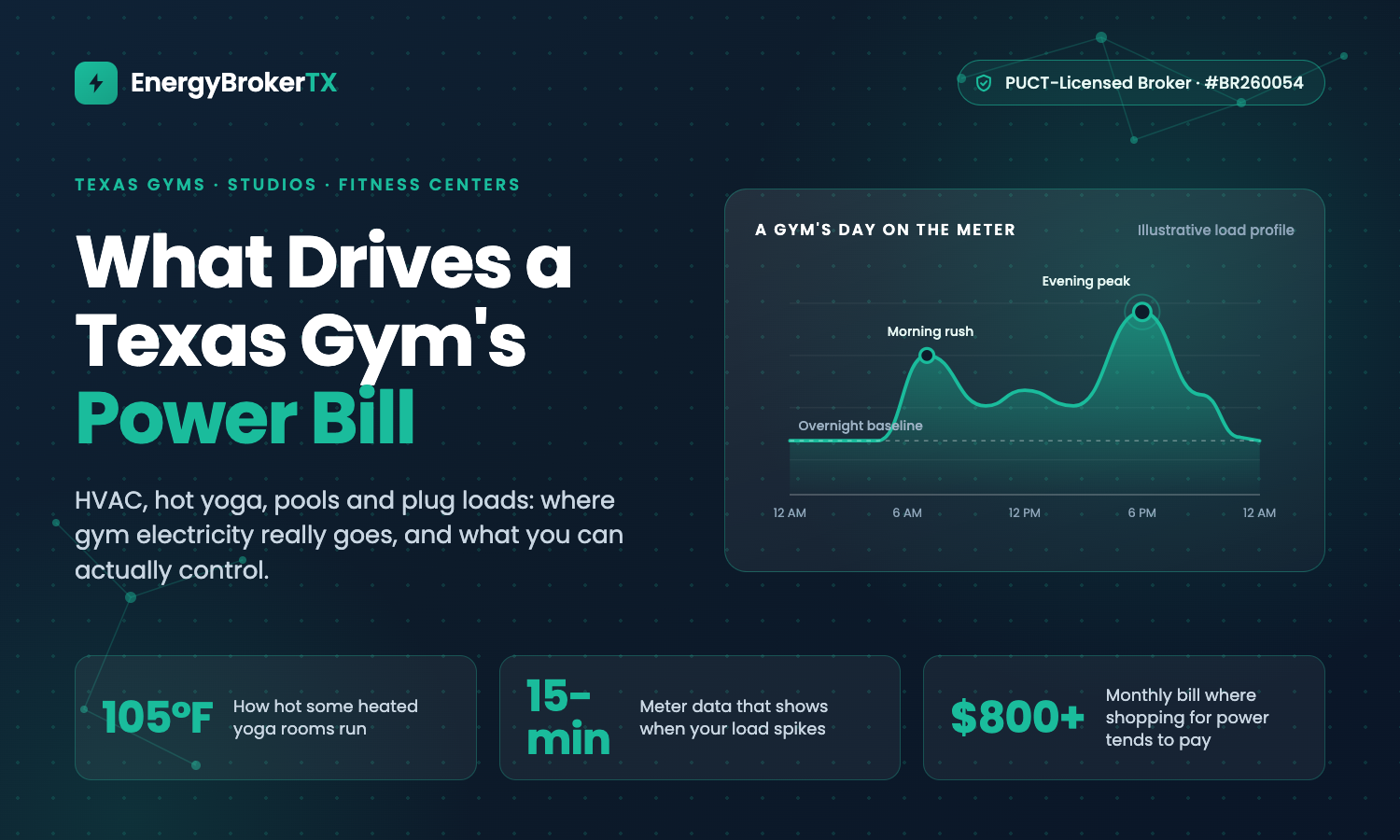
Texas Gyms, Yoga Studios and Fitness Centers: What Drives the Power Bill
What drives the power bill at Texas gyms, yoga studios and fitness centers, from HVAC and hot yoga to pools, and when shopping your rate pays off.

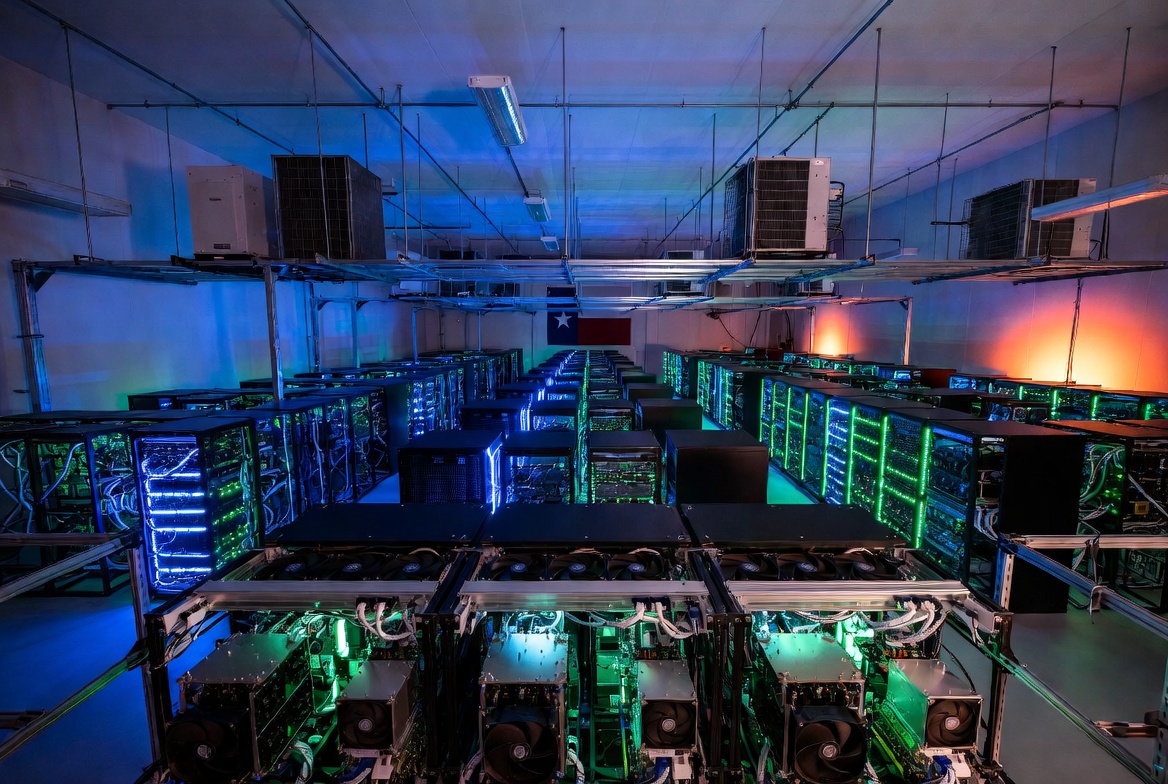
Texas has emerged as a powerhouse for high-tech operations, drawing in data centers and Bitcoin mining facilities with its business-friendly climate, abundant energy resources, and deregulated market. But as the state positions itself to lead the nation in these industries—potentially accounting for nearly 30% of U.S. IT capacity by 2028—the road to setup isn't without bumps. From grid reliability strains to water scarcity concerns, establishing a facility here requires careful planning to avoid costly pitfalls.
This guide covers the operational and regulatory side of getting a facility sited and built: grid interconnection queues, water supply, permitting, and community relations. If your facility is already sited and operating, or close to it, and you're focused purely on the electricity bill, see our companion guide on accessing the cheapest commercial electricity for Texas data centers and mining operations.
As a Dallas-based commercial electricity broker at Energy Broker TX, we've guided numerous large-load clients through these hurdles, often helping them secure rates 15-30% below market averages via reverse auctions. This in-depth guide breaks down the major challenges for data centers and Bitcoin miners in Texas, backed by insights from ERCOT reports, PUC guidelines, and studies from Deloitte and McKinsey. We'll also share practical solutions to mitigate risks, ensuring your operation thrives in the Lone Star State. Whether you're eyeing a hyperscale AI center or a mining farm, understanding these issues early can save millions and streamline approvals.
One of the biggest hurdles for new data centers and mining operations in Texas is the state's power grid, managed by ERCOT, which covers about 90% of the load. With over 220 gigawatts of large-load projects in the queue—more than double the grid's peak summer demand—interconnection delays are rampant. ERCOT has received requests for 250 gigawatts of new connections, with 73% from data centers, leading to backlogs that can stretch 2-3 years. For Bitcoin miners, who often locate in West Texas for cheap wind power, this means competing with AI-driven data centers for limited transmission infrastructure.
The 2021 winter storm exposed vulnerabilities, and while reforms have improved resilience, extreme weather remains a risk. McKinsey's analysis of utility optimization notes that grids like ERCOT could face 9.2% demand growth by 2026 from industrial and data loads, potentially causing scarcity events with prices spiking over $100/MWh. Miners have adapted by curtailing during peaks—over 110 EH/s went offline in a recent Arctic blast, slowing block production to 12 minutes—but data centers, with their constant AI training needs, can't always flex as easily.
Solutions start with site selection: Opt for areas with existing substations or underutilized renewables. Partnering with a broker can help forecast ERCOT hub prices (projected at $51/MWh average in 2026) and secure controllable load agreements, where you get paid for demand response. For instance, co-locating with wind farms, as some miners do, taps "stranded energy" and reduces grid strain. Our guide on ERCOT load growth can help time your setup to avoid peak connection queues.
Texas's data center boom could consume up to 161 billion gallons of water annually by 2030, according to a Houston Advanced Research Center report—equivalent to watering over 1,000 golf courses. Cooling servers requires massive amounts, often 1.2 gallons per kWh indirectly through power generation, and direct use for evaporative cooling in hot, dry regions like West Texas exacerbates droughts affecting 70% of the state.
Bitcoin mining faces similar scrutiny: Facilities in rural areas strain local aquifers, sparking community pushback. Deloitte's energy transition study warns that without better planning, water shortages could worsen, forcing costly infrastructure like new wells or pipelines—potentially adding millions to setup costs. In places like Pecos County, where the largest U.S. data center was approved, residents fear depleted groundwater impacting agriculture.
To address this, consider air-cooled systems or recycled water tech, which can cut usage by 90%. McKinsey recommends integrating with utility programs for rebates on efficient cooling. For miners, locating near abundant water sources or using immersion cooling minimizes evaporation. Our guide on green energy plans for Texas businesses explores how solar-integrated setups reduce both energy and water footprints.
Texas's light-touch regulations attract operators, but local pushback is rising. Counties like Leon and Brenham have debated moratoriums on new facilities due to noise, water, and power demands, though state laws limit bans—making proactive engagement key. The PUC sued the attorney general in 2025 to withhold crypto power data, citing terrorism risks, highlighting transparency tensions.
For data centers, Chapter 313 tax abatements (expiring soon) offer incentives, but new proposals require environmental impact studies. Bitcoin miners must register as Large Flexible Loads with ERCOT, committing to curtailment during emergencies—failing which risks fines. Deloitte notes that permitting delays average 12-18 months, compounded by grid studies.
Navigate this by hiring local counsel familiar with Texas Government Code. Engage communities early with benefits like job creation (though long-term jobs are limited—e.g., 100 for a 300MW center post-construction). Brokers can assist with PUC compliance during procurement, as seen in our work with commercial clients.
Setup costs in Texas can exceed $1 billion for large facilities, with power infrastructure alone running $20 million per site for transmission upgrades. Bitcoin miners face rising energy prices (15-20% in 2025) due to AI competition, squeezing margins post-2024 halving. Data centers add $3.5 billion in taxes but strain rural grids, leading to higher bills for locals.
McKinsey's report suggests co-locating with generation (e.g., gas plants or renewables) to bypass queues, cutting costs by 20%. For miners, Texas Energy Fund loans support on-site power, but competition is fierce. Our procurement guide details how auctions secure affordable power.
Noise from mining fans and data center hums has led to lawsuits in areas like Granbury, while water use threatens ecosystems. Deloitte emphasizes sustainable designs, like using recycled water, to mitigate backlash. Miners can participate in grid-stabilizing curtailments, earning credits and goodwill.
Adopt green practices: Solar hybrids reduce carbon footprints, appealing to regulators. Community funds or jobs can ease tensions, as in Abilene's Stargate project.
With proper planning, Texas offers unmatched potential—leading in renewables (30% of ERCOT capacity).
Ready to tackle these challenges? At Energy Broker TX, our PUC-licensed team (BR260054) specializes in large-load solutions. Contact us for a free audit and reverse auction to optimize your setup.
Submit your account and we'll run a competitive auction with 25+ licensed Texas providers — full bid transparency, no pre-filtering, no obligation.
Get My Free Competing Bids →