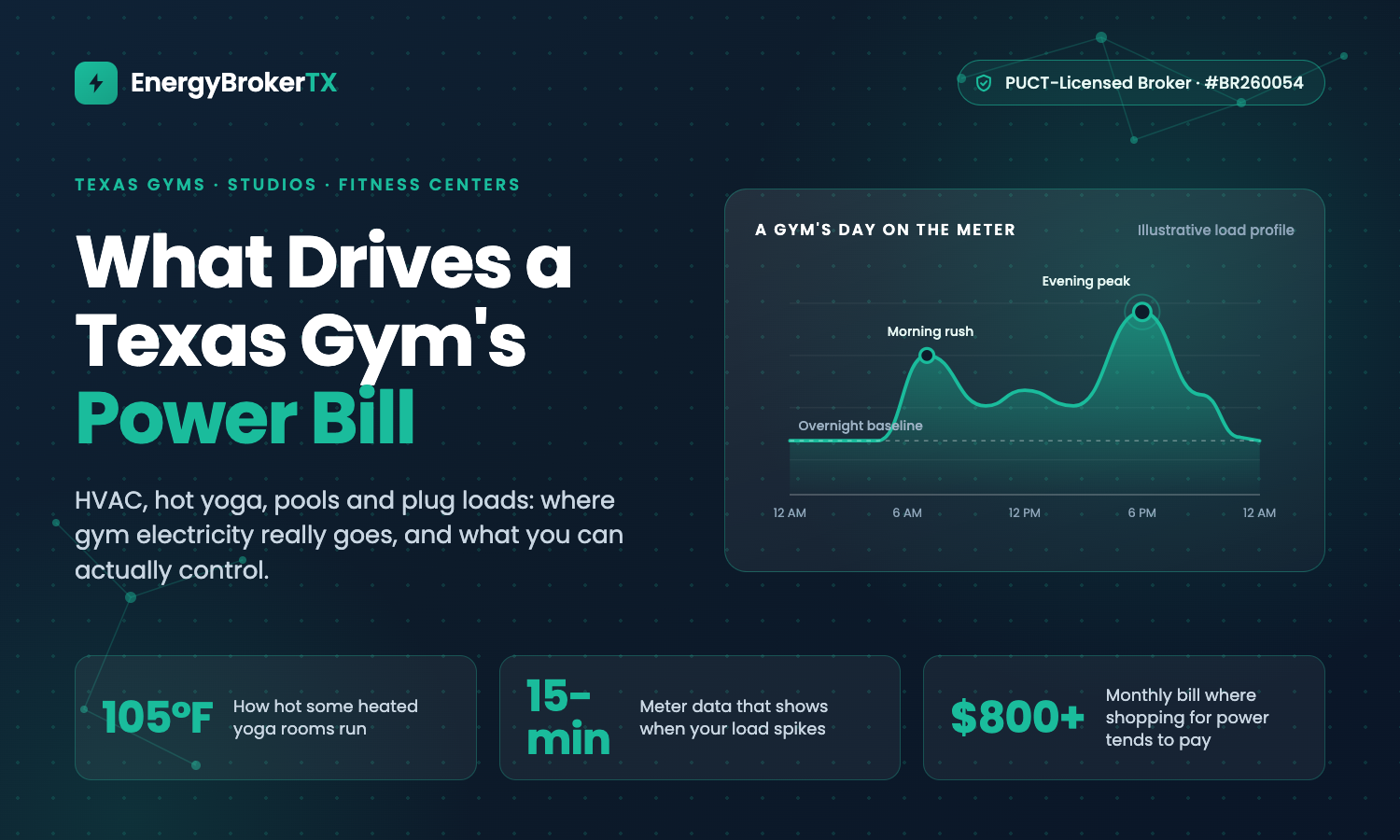
Texas Gyms, Yoga Studios and Fitness Centers: What Drives the Power Bill
What drives the power bill at Texas gyms, yoga studios and fitness centers, from HVAC and hot yoga to pools, and when shopping your rate pays off.

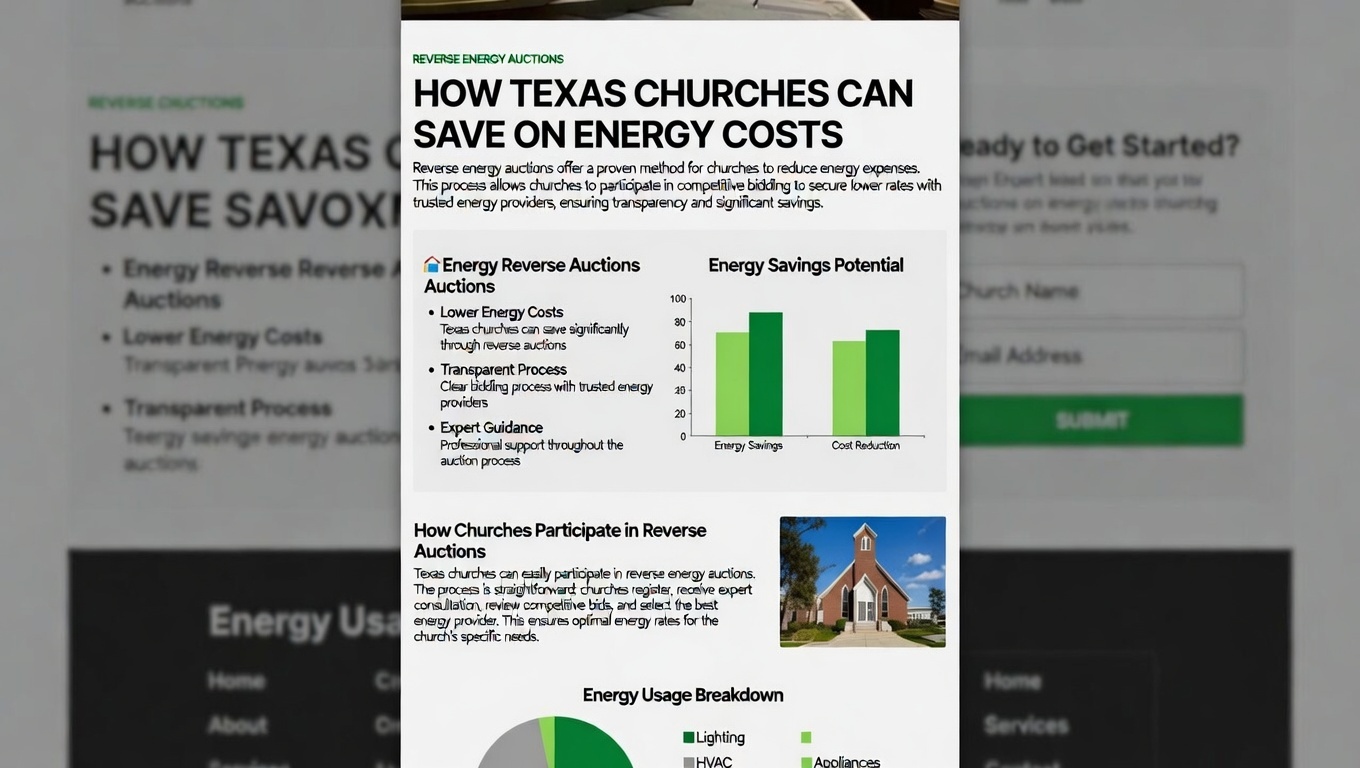
In the vast landscape of Texas, where churches and houses of worship serve as community anchors, managing operational costs is a constant challenge. From powering Sunday services and weekday Bible studies to illuminating evening events and maintaining climate control in sprawling sanctuaries, electricity bills can quickly become a significant financial burden. For many faith-based organizations, these expenses eat into funds that could otherwise support outreach programs, missions, or facility improvements. But what if there was a way to reduce those bills by up to 30% without compromising on reliability or service quality?
Enter reverse auctions—a powerful tool in Texas's deregulated energy market that's revolutionizing how churches procure electricity. As an energy broker specializing in commercial electricity for Texas businesses and non-profits, we've seen firsthand how this transparent bidding process empowers houses of worship to secure competitive rates from top providers. In this comprehensive guide, we'll explore what reverse auctions are, why they're particularly beneficial for Texas churches, and how you can implement them to achieve substantial savings. Whether you're a pastor in Dallas overseeing a bustling urban congregation or a rural church leader in the Panhandle, this strategy could transform your energy management.
Texas boasts one of the most dynamic energy markets in the United States, thanks to deregulation that began in the early 2000s. Unlike regulated states where utilities hold monopolies, Texas allows consumers—including commercial entities like churches—to choose their electricity providers. This competition fosters innovation and lower prices, but it also requires savvy navigation to avoid overpaying.
For churches classified as commercial users (due to their non-residential status), this market offers unique opportunities. Houses of worship often qualify for tax exemptions on utilities, yet many still face inflated rates from sticking with default providers or outdated contracts. According to the U.S. Energy Information Administration, commercial electricity rates in Texas averaged around 8-10 cents per kWh in recent years, but fluctuations tied to natural gas prices and summer demand spikes can push bills higher.
Deregulation means providers like TXU Energy, Reliant, and Direct Energy compete for your business. However, traditional shopping—calling around or browsing websites—can be time-consuming and opaque, often leading to suboptimal deals. This is where reverse auctions shine, flipping the script by making providers bid on your energy needs, driving prices down through real-time competition.
At its core, a reverse auction is the opposite of a traditional auction. Instead of buyers competing to pay more for an item, sellers (in this case, electricity providers) compete to offer the lowest price for your specified requirements. In the energy sector, this process is facilitated by brokers who use online platforms to invite bids from multiple suppliers.
Here's how it differs from standard energy shopping: In a typical setup, you might receive quotes based on generic plans, leaving room for hidden fees or markups. Reverse auctions ensure transparency—providers see competing bids (anonymously) and adjust theirs downward to win your contract. The result? Rates that are often 15-30% lower than retail offerings.
For Texas churches, this model is especially appealing because it aligns with principles of good stewardship. By minimizing waste on utilities, more resources can flow into community service. Energy brokers like us at EnergyBrokerTX handle the entire process at no extra cost, operating on a no-markup model where you pay only the winning bid. This eliminates the guesswork and empowers even small congregations to negotiate like large corporations.
Churches aren't your average commercial operation. Their energy usage is often irregular—peaking during weekends, holidays, and special events while remaining low mid-week. This variability can lead to high demand charges, where providers bill extra for peak consumption periods. In Texas's hot climate, air conditioning during summer services can further inflate costs, sometimes accounting for 40-50% of a church's utility budget.
Reverse auctions address these pain points directly. By tailoring the auction to your church's specific usage profile—factoring in kilowatt-hour estimates, peak times, and even renewable preferences—providers craft bids that match your needs precisely. For instance, a Dallas megachurch with high evening usage might secure a plan with off-peak discounts, while a smaller rural chapel could opt for fixed rates to stabilize monthly expenses.
Beyond savings, this approach supports sustainability. Many Texas churches are embracing green initiatives as part of their faith-based environmental stewardship. Reverse Auctions can include bids for 100% renewable plans, backed by wind or solar from the state's abundant resources. According to ENERGY STAR, religious buildings can reduce energy use by 30% through efficiency alone, and combining that with competitive procurement amplifies the impact.
Financially, the 30% savings claim isn't hyperbole. Our clients have reported reductions in that range by switching via auctions, redirecting funds to ministries. For non-profits exempt from sales tax on utilities (as per Texas Comptroller guidelines), these savings compound, making reverse auctions a ethical and practical choice.
Ready to get started? The process is straightforward and can be completed in days, not months. Here's a detailed walkthrough:
Throughout, expert guidance is key. Our Dallas-based team, familiar with local ERCOT grid dynamics, provides personalized advice tailored to Texas churches.
Consider a mid-sized Baptist church in Dallas-Fort Worth. Facing annual electricity costs exceeding $20,000 due to outdated variable-rate plans, they turned to reverse auctions. By uploading usage data, they attracted bids from five providers, securing a fixed-rate deal at 7.5 cents per kWh—down from 10.5 cents. The 28% savings allowed them to expand their food pantry program.
Another example: A non-denominational house of worship in Houston, with high AC demands, incorporated green energy bids. Their auction yielded a 100% renewable plan at competitive rates, aligning with their eco-stewardship mission while cutting bills by 32%. These aren't outliers; industry reports from the Texas Retail Energy Association echo similar outcomes for commercial users.
Even smaller congregations benefit. A rural Methodist church in West Texas, with modest usage, saved 25% by switching to a tailored plan that avoided peak charges, freeing up budget for youth activities.
While reverse auctions deliver core savings, combining them with efficiency measures maximizes impact. Start with an ENERGY STAR audit—many are free for non-profits. Simple upgrades like smart thermostats, energy-efficient HVAC, and solar shades can reduce usage by 10-20%.
Explore incentives: Texas offers rebates through programs like Oncor's Take a Load Off Texas, and federal tax credits for renewables. For churches, grants from organizations like the Interfaith Power & Light can fund solar installations.
Monitor ongoing: Use apps to track real-time usage, identifying leaks like faulty wiring in older buildings. And don't forget demand response programs, where providers pay you to reduce usage during grid peaks—a bonus revenue stream for flexible churches.
In an era of rising costs, Texas churches don't have to let electricity bills hinder their mission. Reverse auctions offer a proven path to slash expenses by up to 30%, all while promoting transparency, sustainability, and stewardship. By leveraging the deregulated market's competition, houses of worship can redirect savings to what matters most—serving their communities.
If your church is ready to explore these opportunities, contact EnergyBrokerTX today for a free rate analysis. Based in Dallas, we're committed to helping Texas faith-based organizations power forward affordably. Visit EnergyBrokerTX.com or follow us on X at @EnergyBrokerTx for more tips. Let's turn energy savings into lasting impact.
Submit your account and we'll run a competitive auction with 25+ licensed Texas providers — full bid transparency, no pre-filtering, no obligation.
Get My Free Competing Bids →