Electricity for Texas RV Parks, Campgrounds and Cabin Parks
Master vs submetered billing, Texas rules for charging RV guests for power, seasonal contracts and buying a park, explained for park owners.

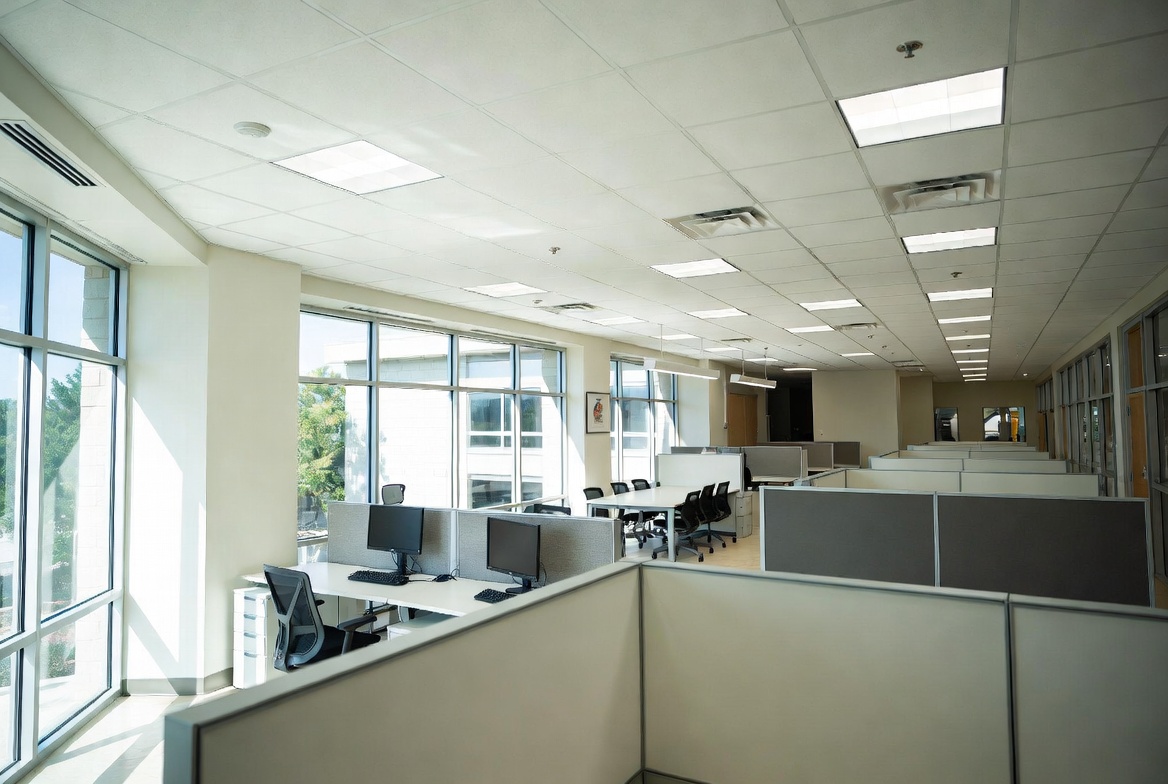
Commercial office buildings and professional services firms in Texas share a procurement problem with every other commercial category: the default outcome is passive renewal. For office buildings specifically, the problem is compounded by the lease-electricity relationship. When a commercial tenant occupies a new office space, the building's electricity account — whether a master meter for common areas or a sub-metered tenant space — often gets enrolled with whatever provider responds first. That enrollment rate becomes the baseline for years of passive renewals.
Texas office buildings in Oncor, CenterPoint, and AEP Texas territories that haven't been competitively bid in the past 24 months are almost universally paying 1.0–2.0¢/kWh above what a competitive reverse auction would produce for the same account. On a 100,000 kWh/month Class A office building consuming energy for common areas, HVAC, elevators, and shared spaces, that gap costs $1,000–2,000 per month, or $24,000–48,000 over a 24-month contract.
This guide covers how Texas office building electricity procurement works, what professional services firms pay in competitive auctions, and the specific CRE considerations that affect procurement for multi-tenant office properties.
Texas office buildings typically have two distinct electricity billing structures that require different procurement approaches.
Master meter accounts (common areas and base building systems): Most multi-tenant office buildings have a master meter that covers shared building systems — lobby lighting, corridor lighting, elevator systems, HVAC for common areas, parking garage lighting, exterior lighting, and mechanical room loads. This master meter is the building owner's account and is billed directly to the property. It's the account most directly within the building owner's control for procurement purposes and typically represents 30–60% of total building electricity consumption in a fully occupied building.
Tenant sub-meters: Individual tenant spaces are typically sub-metered separately, with each tenant receiving their own electricity bill. In a full deregulated building, tenants choose their own REP and procure separately. In a gross lease structure, the landlord may pay all electricity and recover costs through rent or CAM charges. The billing structure affects who has procurement authority and whose cost base benefits from competitive procurement.
For building owners focused on reducing operating expenses and improving NOI, the master meter account is the primary procurement opportunity. A competitive auction for the master meter account directly reduces a line item that appears in the building's operating expense calculation and affects NOI and cap rate valuation. For Texas CRE operators managing multiple properties, see our detailed guide on Texas commercial real estate electricity cost recovery.
Office buildings have electricity load profiles that are generally favorable for competitive procurement compared to more demand-intensive categories like manufacturing or convenience stores.
Predictable weekday consumption pattern. A typical Dallas or Houston office building uses electricity most intensively Monday through Friday, 7 AM to 7 PM, with substantially lower consumption on evenings and weekends. This predictability means providers can price office building accounts with lower uncertainty than accounts with erratic or unpredictable load profiles — and lower provider uncertainty generally produces more competitive bids in auctions.
HVAC-dominated summer load. In Texas, office building summer electricity consumption typically runs 50–80% higher than winter consumption due to HVAC load. A building using 60,000 kWh in December may use 90,000–100,000 kWh in July from the same base building systems. This seasonal variation means spring procurement — before summer risk premiums embed in forward prices — consistently produces better rates than summer or fall procurement for office building accounts.
High load factor from base building systems. Office building base systems (lighting, HVAC controls, elevator systems, parking garage lighting) run continuously regardless of occupancy, creating a steady base load that persists even on weekends. This base load supports a high load factor calculation that providers view favorably in pricing.
Supply rate benchmarks for Texas office building and professional services firm accounts from competitive auctions as of April 2026:
Small professional services office (5,000–20,000 kWh/month): 8.0–9.5¢/kWh supply rate for 24-month fixed in Oncor or CenterPoint territory. Many of these accounts are on passive renewals at 10–12¢/kWh. The absolute dollar savings from a competitive auction are smaller than large accounts, but the percentage improvement is typically 15–25%.
Mid-size office building (20,000–100,000 kWh/month): 7.4–8.8¢/kWh supply rate for 24-month fixed. A 60,000 kWh/month building saving 1.5¢/kWh through a competitive auction saves $900/month, $21,600 over a 24-month contract. Most buildings in this range haven't been competitively bid in the past 24 months and see improvements of this magnitude consistently.
Large office building or campus (100,000–500,000 kWh/month): 7.0–8.2¢/kWh supply rate for 24-month fixed. At this scale, the account attracts aggressive bidding from most Texas REPs. DNT corridor offices, Galleria-area buildings in Houston, and large professional services campuses fall in this range. Demand charge structure optimization is particularly important at this scale.
Multi-property office portfolio: Portfolio aggregation across multiple office properties produces meaningfully better supply rates than individual property auctions. A three-property portfolio totaling 300,000 kWh/month combined will receive more competitive bids than three separate 100,000 kWh/month auctions. See our guide on Texas CRE electricity portfolio aggregation for the mechanics.
For office building master meters above 20 kW — which includes virtually every building beyond small professional suites — demand charges represent a substantial portion of total electricity cost. The specific demand charge exposure for office buildings comes primarily from HVAC startup events: when building systems come online in the morning, particularly after a weekend setback period, compressors and air handlers starting simultaneously can create a demand spike that sets the month's demand charge from a few minutes of startup load.
Understanding your building's demand charge pattern — specifically, which events create your monthly peak demand — allows a broker to present supply contract options that account for demand structure in the total cost comparison. A contract with a slightly higher supply rate but a more favorable demand structure can produce a lower total bill than a lower headline rate with standard demand terms for a building with significant demand charge exposure.
For Texas office buildings in the 50–500 kW demand range, requesting 15-minute interval data from Oncor (via Smart Meter Texas) or CenterPoint and analyzing demand event timing before running a competitive auction produces better auction results because the load profile is more accurately characterized. See our guide on Texas commercial demand charges for the full mechanics.
Texas office buildings with summer peak consumption — which is essentially all of them given the state's climate — should procure electricity in spring to capture the most favorable forward rates. ERCOT forward pricing incorporates summer demand risk premiums that grow as summer approaches. Contracts executed in April or May, before full summer pricing is reflected, consistently produce lower rates than contracts executed in June or July for the same forward start dates.
For office buildings in the Dallas Oncor North load zone specifically, 2026 summer demand growth from data center buildout in Collin and Tarrant counties is already visible in forward market pricing. Buildings with contracts expiring before October 2026 should be running procurement now. See our ERCOT summer 2026 outlook for the specific forward market data.
In a triple-net (NNN) lease, each tenant is responsible for their own utility costs, including electricity. The building owner's procurement responsibility is limited to the master meter account covering base building systems and common areas. In a gross lease, the building owner pays all electricity and recovers costs through rent — competitive procurement on all building accounts, including tenant sub-meters if the building controls them, directly improves the owner's net operating income.
Yes. Property managers with authority over utility procurement can submit electricity accounts for competitive auction on behalf of the property owner. We work with property management firms managing multiple Texas office and mixed-use properties, running portfolio auctions that improve pricing across all managed accounts simultaneously. Authority documentation may be required depending on the account structure.
Ideally, electricity contract terms align with lease terms to maintain procurement flexibility. An office building signing a new anchor tenant lease for 5 years might reasonably execute a 24-month electricity contract with the intent to renew competitively in year 3. Signing a 36-month electricity contract with a property under significant near-term sale or redevelopment probability creates unnecessary ETF exposure. A broker familiar with CRE procurement can structure contract terms around your specific asset situation.
Not directly. Electricity procurement outcomes are driven by account size (kWh), load factor, and whether the account has been competitively bid recently — not by building class designation. A Class C office building that has never been to competitive bid will see the same percentage improvement from a competitive auction as a Class A property in the same situation.
Submit your most recent electricity bill or your building's TDU account number to EnergyBrokerTX for a free commercial electricity audit. We'll pull your usage history, analyze your demand charge structure, run a competitive reverse auction with 25+ licensed Texas providers, and present a total-cost comparison. No cost. No obligation. PUCT License #BR260054. Serving office buildings and professional services firms across Dallas, Houston, Fort Worth, Frisco, and all of Texas.
Submit your account and we'll run a competitive auction with 25+ licensed Texas providers — full bid transparency, no pre-filtering, no obligation.
Get My Free Competing Bids →