Why Texas Businesses Are Turning to Energy Brokers for Cost Control and Stability
In the fast-paced and often volatile Texas energy market, businesses are increasingly seeking ways to manage rising electricity costs while ensuring reliable power supply. With commercial electricity rates averaging 9.03¢ per kWh as of December 2025—up from previous years due to growing demand and market pressures—many companies are turning to Texas energy brokers for expert guidance. Projections for 2026 indicate a modest 3-5% increase in rates, with commercial prices potentially reaching 7-9¢ per kWh excluding delivery fees, driven by factors like data center expansion and industrial growth. This trend underscores the need for strategic energy procurement to protect profit margins.
As a Dallas-based commercial electricity broker at EnergyBrokerTX.com, we've assisted countless Texas businesses—from small retail stores in Frisco to large manufacturing facilities in Houston—in achieving 15-30% savings on their electricity bills through unbiased reverse auctions and tailored strategies. In this comprehensive guide, we'll explore why more Texas businesses are partnering with energy brokers, the key benefits they offer, and how you can leverage these services for long-term cost control and stability. Whether you're facing ERCOT driven volatility or simply want to optimize your energy spend, understanding the role of a broker can transform your approach to electricity management.
We'll break it down with actionable insights, real-world examples, and tips to get started—drawing on industry data and our PUC-licensed expertise (BR260054). By the end, you'll see how energy brokers provide more than just lower rates; they deliver peace of mind in an unpredictable market.
What Is an Energy Broker and Why Do Texas Businesses Need One?
An energy broker is an independent advisor who specializes in procuring electricity (and sometimes natural gas) for commercial clients in deregulated markets like Texas. Unlike going directly to a retail electricity provider (REP), a broker acts as your advocate, comparing offers from multiple providers—often 25 or more—to secure the best terms without bias.
In Texas, where the deregulated market allows choice but introduces complexity, brokers are essential for navigating over 100 REPs and fluctuating wholesale prices. The Electric Reliability Council of Texas (ERCOT) oversees about 90% of the state's grid, and recent forecasts show demand potentially exceeding supply by summer 2026, which could lead to increased volatility and higher peaks. Wholesale prices are projected to average $51 per MWh in 2026, an 8.5% rise from 2025, with ERCOT-North seeing a 45% jump.
Businesses need brokers because:
- Market Complexity: With options like fixed, variable, index, or hybrid plans, choosing wrong can cost thousands. Brokers analyze your usage to match the right structure.
- Time Savings: Researching alone takes hours; brokers streamline it with tools like reverse auctions.
- No Upfront Costs: Brokers earn commissions from providers, so their services are free to you.
- Regulatory Compliance: Licensed brokers ensure contracts adhere to PUC rules, avoiding pitfalls.
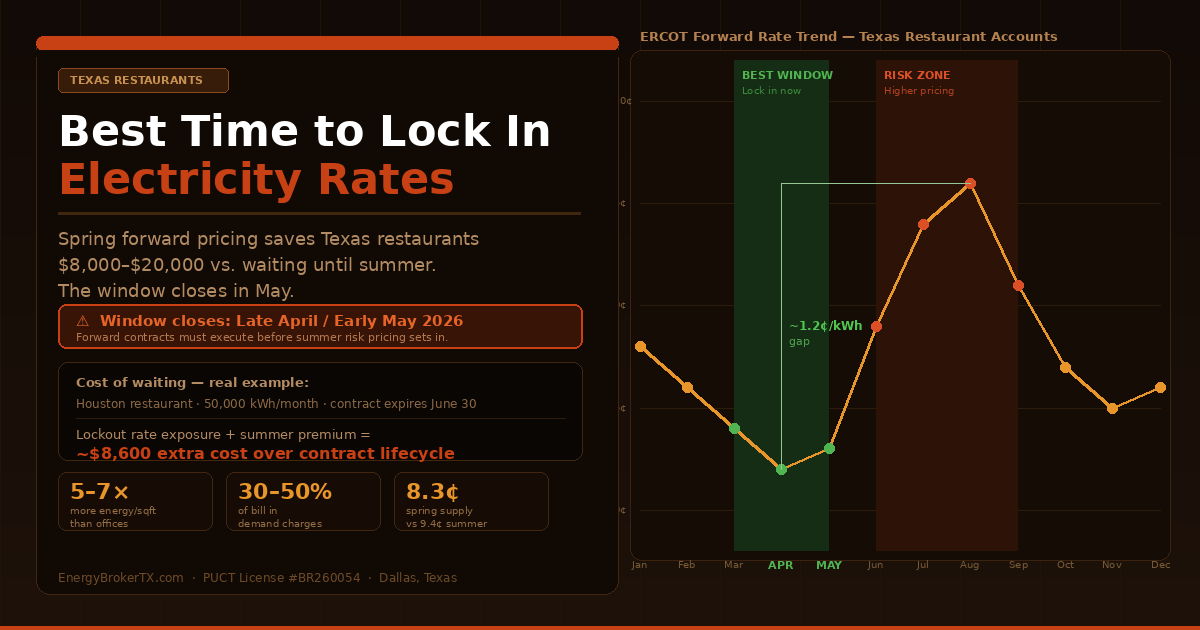
For Texas-specific challenges, like summer demand spikes (up to 9.2% growth in West South Central regions by 2026), brokers provide forward-looking strategies to lock in rates before hikes. If you're in industries like hospitality or retail, check our hospitality energy savings case study for tailored insights.
Navigating Volatility in the Texas Energy Market
Texas's deregulated market, established in 2002, gives businesses freedom but exposes them to risks. Wholesale prices plummeted 52% from 2023 to 2024 due to renewables, yet scarcity events cause spikes—sometimes over $100/MWh during peaks. Data centers and industrial expansion are driving 4.4% sales growth in 2025 and 9.2% in 2026, contributing 66% to U.S. electricity sales increases.
Energy brokers mitigate this by:
- Hedging Against Fluctuations: Recommending fixed-rate plans to stabilize costs, avoiding the 45% projected increase at ERCOT hubs.
- Demand Response Programs: Enrolling businesses in ERCOT initiatives that pay for reducing usage during peaks, adding revenue streams.
- Renewable Integration: With solar output up 50% in 2025 to 45 TWh, brokers source green plans at competitive rates.
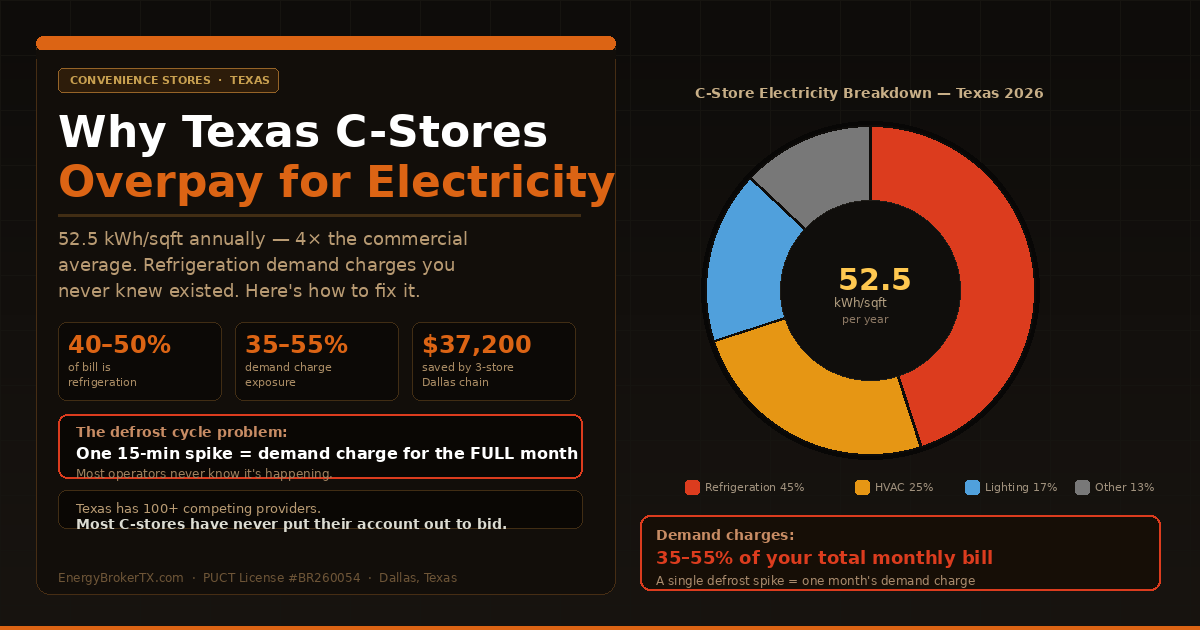
- Load Analysis: Using historical data to forecast and avoid demand charges, which can add 20-30% to bills.
A broker's market intelligence—tracking natural gas prices (projected at $4.80/MMBtu in 2026)—helps time purchases for optimal savings. For more on market trends, read our Texas electricity rates guide.
Key Advantages of Using Texas Energy Brokers
Working with a broker offers multifaceted benefits, backed by industry expertise.
Substantial Cost Savings
Brokers negotiate better deals, often 15-30% below market rates, by leveraging relationships and bulk procurement. In Texas, where average commercial rates are 8.60¢/kWh (36.9% below national average), brokers amplify this edge. They conduct utility bill audits to spot overcharges and recommend efficient plans.
Expert Guidance and Risk Management
Brokers provide thought leadership on trends, like the 45% ERCOT price rise, helping avoid volatility. They customize strategies—e.g., hybrid plans for seasonal businesses—reducing exposure to spikes.
Time and Resource Efficiency
Instead of sifting through options, brokers curate bids via auctions, saving days of work. This frees owners to focus on core operations.
Customized and Ongoing Support
Tailored to your profile, brokers monitor contracts and suggest adjustments, ensuring long-term value. For large users (bills over $20,000/month), they're invaluable.
Explore how brokers help specific sectors in our church electricity savings guide.
Real-World Examples: Texas Businesses Benefiting from Energy Brokers
Consider a Frisco retail store: Facing $10,000 monthly bills, they used our reverse auction to switch providers, saving 22% ($26,400 annually) with a fixed plan. A Houston hotel reduced costs 25% via green energy procurement.
Churches and HVAC firms we've served report similar gains—see our HVAC energy broker benefits or church contracts guide.
Why Choose EnergyBrokerTX for Your Texas Business
As a PUC-licensed broker (BR260054), EnergyBrokerTX stands out with:
- Reverse auctions for transparent bidding.
- No-fee, no-obligation service.
- Dallas-based expertise on local markets.
- Customized plans for industries like retail, hospitality, and more.
Follow us on X @EnergyBrokerTx for updates.
How to Get Started with a Texas Energy Broker
- Assess Your Needs: Gather recent bills and usage data.
- Contact a Broker: Request a free quote from us.
- Run an Auction: Get bids in 24 hours.
- Review and Sign: Secure your plan.
- Monitor and Optimize: Use ongoing support.
Conclusion: Secure Your Energy Future Now
With Texas facing demand growth outpacing supply by 2026, energy brokers are crucial for cost control and stability. Businesses partnering with brokers like EnergyBrokerTX not only save 15-30% but gain strategic advantages in a volatile market. Don't let rising rates erode your profits—start your free auction today or email sales@energybrokertx.com. Empower your business with expert guidance and thrive in Texas's dynamic energy landscape.