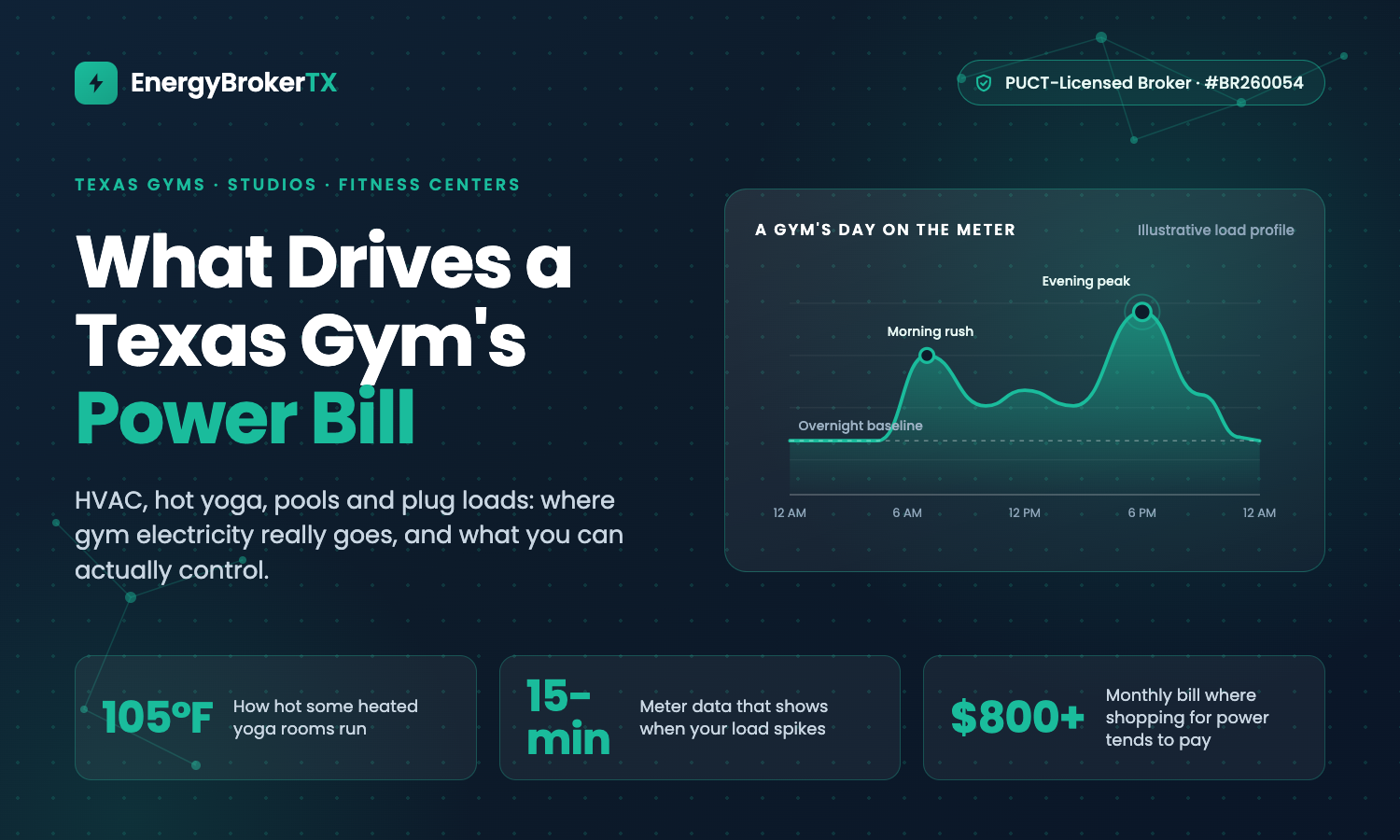
Texas Gyms, Yoga Studios and Fitness Centers: What Drives the Power Bill
What drives the power bill at Texas gyms, yoga studios and fitness centers, from HVAC and hot yoga to pools, and when shopping your rate pays off.

Most of what businesses hear about managing ERCOT-related electricity costs is defensive — reduce your peak draw during 4CP windows to lower next year's transmission costs, avoid demand spikes to keep your monthly bill down. That's cost avoidance. ERCOT also runs a separate category of programs that pay businesses directly for their ability to reduce or shift load on demand — a genuine revenue opportunity that most commercial and industrial accounts never hear about because it isn't marketed the way retail electricity plans are.
It's worth being precise about the distinction, since the two get conflated. 4CP is a cost-allocation mechanism — reducing your load during four specific summer hours lowers your share of next year's transmission costs, but nobody pays you directly for it. The programs covered here are participation-based: you enroll, you commit to reducing load when called upon, and you get paid for that commitment and for performance when called — whether or not an event actually happens, depending on the program.
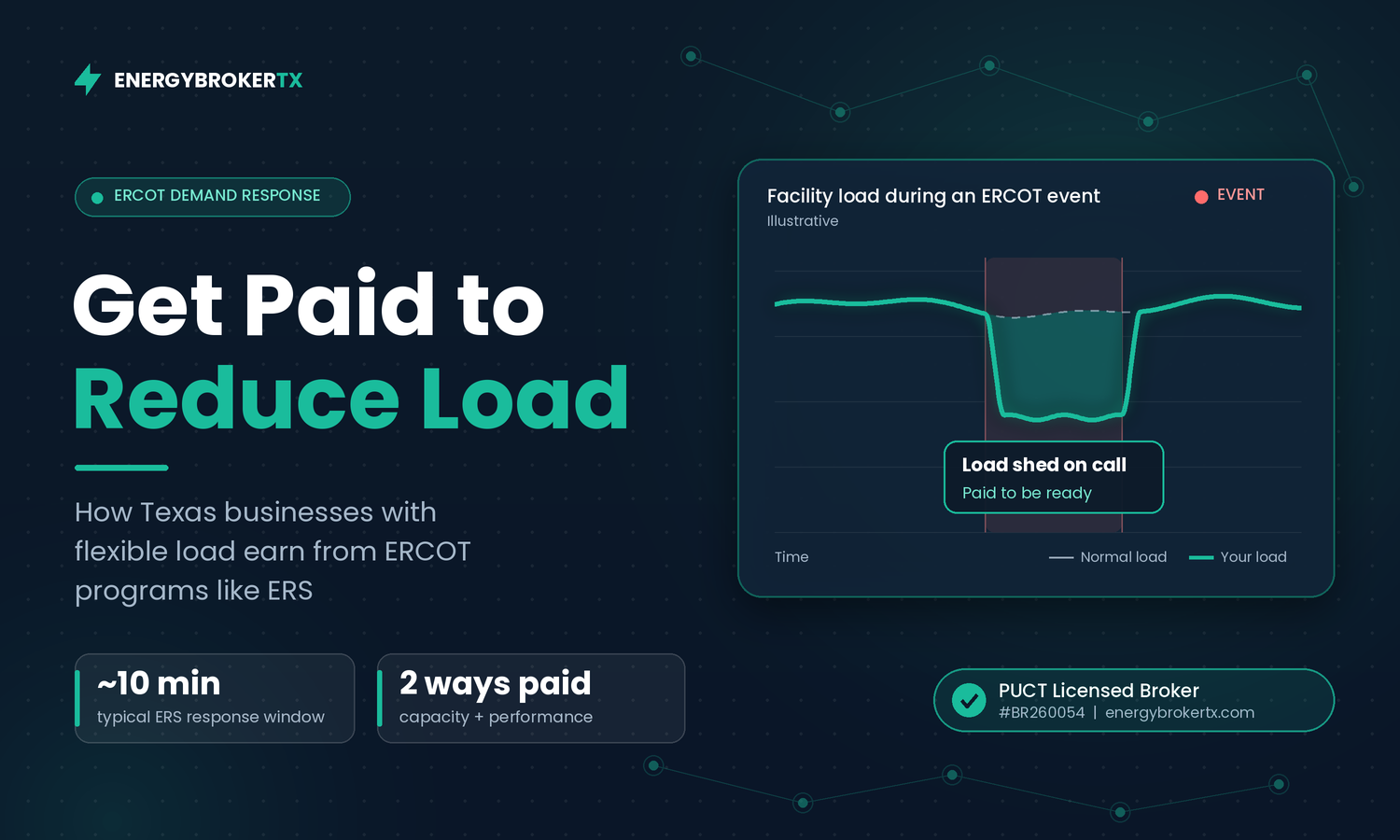
ERS is ERCOT's primary demand response program for large loads. Enrolled businesses commit to reducing consumption by a specified amount within a short window — typically 10 minutes — when ERCOT calls an event, usually during genuine grid emergencies when supply is tight. Compensation comes in two forms: a capacity payment simply for being enrolled and available, paid whether or not an event is ever called during that period, and additional payment if you're actually dispatched and perform. For a facility with genuinely flexible load — backup generation capability, batch processes that can pause, or equipment that can shed without disrupting core operations — ERS capacity payments alone can offset a meaningful share of a facility's annual electricity cost with minimal operational disruption, since real events are relatively rare.
ERS and similar programs are built around large, flexible loads — think manufacturing facilities with production lines that can pause, cold storage with thermal mass that can coast through a short curtailment, data centers with backup generation, or large HVAC systems that can pre-cool ahead of a called event. Smaller commercial accounts on standard retail contracts generally aren't large enough to participate directly, though some aggregators bundle multiple mid-size accounts together to reach program minimums — worth asking about if your account doesn't qualify alone.
If your facility doesn't have flexible load capacity, this isn't the right lever — your better options are the standard ones covered in our guide on managing facility-level demand charges instead.
Enrollment typically runs through a Qualified Scheduling Entity (QSE) or a demand response aggregator rather than directly through ERCOT — most businesses don't interact with ERCOT's registration process themselves. The aggregator handles the technical qualification, the telemetry requirements for demonstrating your load reduction capability, and the settlement process, taking a share of the payment in exchange for handling that complexity. The practical questions worth asking any aggregator are how often events are actually called in your specific program tier, what the penalty structure looks like if you're called and can't perform, and how payments are structured between capacity and performance.
4CPDemand Response (ERS, etc.)What it isA cost-allocation formulaA paid participation programDo you get paid?No — you avoid a future costYes — capacity and performance paymentsWhen it appliesFour specific summer hours a yearAny ERCOT-called event, any seasonWho enrolls youNo enrollment — automatic based on usageA QSE or demand response aggregatorBest fitAny large primary-metered accountAccounts with genuinely flexible, sheddable load
Yes — they're not mutually exclusive. Load-shedding capability that helps during a 4CP window is often the same operational flexibility that qualifies a facility for ERS or similar demand response participation.
It varies significantly by program, load size, and how often your specific tier is called — an aggregator can model expected payments against your facility's actual flexible capacity, which is a more useful number than any generic estimate.
Most programs include some penalty structure for non-performance, which is exactly why it's worth confirming your facility's real capability before enrolling rather than overstating what you can flex under pressure.
Demand response participation is separate from your REP supply contract, but it's worth coordinating the two rather than treating them independently. Some REP contracts include demand-response-friendly terms or partner directly with aggregators; others don't address it at all. If your facility is a strong demand response candidate, it's worth raising during your next competitive procurement — see our guide on how a reverse auction works — rather than layering it on afterward as an afterthought.
The first real question is whether your facility has genuinely flexible load — equipment, processes, or backup capacity that can reduce draw on short notice without disrupting core operations. If the answer is yes and your account is large enough to qualify on its own or through an aggregator, demand response participation is worth investigating alongside your standard procurement strategy, not instead of it. Contact EnergyBrokerTX to discuss whether your facility's load profile fits ERS or similar programs as part of a broader electricity cost strategy. PUC License #BR260054.
Submit your account and we'll run a competitive auction with 25+ licensed Texas providers — full bid transparency, no pre-filtering, no obligation.
Get My Free Competing Bids →