5 Proven Strategies to Lower Texas Business Energy Costs in 2025
Texas businesses are no strangers to the ups and downs of energy expenses. With the state's economy booming—adding over 250,000 jobs in 2024 alone—the demand for reliable power has never been higher. But as ERCOT warns of potential 8.5% wholesale price increases heading into 2025, driven by industrial growth and extreme weather patterns, controlling those costs is essential for maintaining profitability. For commercial operations, from bustling Dallas warehouses to Houston manufacturing plants, even modest adjustments can yield substantial savings.
The good news? Texas's deregulated market empowers you to choose providers and plans that fit your needs, potentially cutting bills by 15-30%. Drawing from insights by the Public Utility Commission of Texas and analyses from firms like Deloitte and McKinsey, this guide outlines five battle-tested strategies to reduce your energy spend. We'll break down each with practical steps, real-world examples, and tips to implement them effectively. Whether you're renewing a contract or exploring efficiency upgrades, these approaches can help safeguard your bottom line against market volatility.
1. Leverage the Deregulated Market for Competitive Pricing
Texas's energy deregulation, in place since 2002, allows businesses to shop among over 100 retail electricity providers (REPs), fostering competition that keeps rates lower than the national average. However, many companies stick with their current supplier out of habit, missing out on better deals. A Deloitte study on energy procurement highlights that proactive shopping can reduce costs by up to 20%, especially in high-demand areas like DFW where rates average 8-10 cents per kWh excluding delivery fees.
To capitalize, start by auditing your current plan. Gather 12 months of bills and calculate your effective rate: total charges divided by kWh used. If it's above 9 cents, it's time to explore options. Use tools from the PUC to compare plans based on your ZIP code and usage profile—fixed-rate for stability during summer peaks, or indexed for tying to wholesale lows.
One effective way is through reverse auctions, where providers bid in real time for your business. This process uncovers rates not publicly advertised, often 10-25% below standard offers. For a Fort Worth logistics firm we know, switching via auction dropped their rate from 9.2 to 7.1 cents/kWh, saving $22,000 annually on 300,000 kWh usage. If you're in a similar boat, checking out market trends can help time your move.
Don't overlook aggregation if you have multiple sites—combining loads qualifies for volume discounts. McKinsey's utility optimization report notes that aggregated procurement can lower effective rates by 15%, turning a fragmented expense into a streamlined one.
2. Implement Reverse Auctions for Maximum Negotiation Power
In a market flooded with options, how do you ensure you're getting the absolute best rate? Enter reverse auctions: a bidding system where suppliers compete downward for your contract. Unlike traditional RFPs, this creates real-time pressure, driving prices lower without you lifting a finger.
The setup is simple: Provide your usage data, and the auction platform invites vetted REPs to bid anonymously. ERCOT data shows this can yield rates 15-20% below direct negotiations, especially for medium-to-large loads (over 10,000 kWh/month). A Houston restaurant chain, for instance, used this method to secure a 24-month fixed plan at 6.8 cents/kWh amid rising natural gas futures—saving $15,000 yearly across three locations.
To execute effectively, partner with a licensed broker who handles the logistics. They analyze your demand patterns to attract the right providers, ensuring bids factor in fees like transmission costs. Avoid common pitfalls like short bid windows; aim for 24-48 hours to maximize competition.
For businesses with variable loads, like seasonal retail, hybrid plans blending fixed and market rates often emerge as winners. If you're curious about how this stacks up against standard shopping, our explanation of Texas deregulation can provide more context.
3. Time Your Contract Renewals to Beat Market Fluctuations
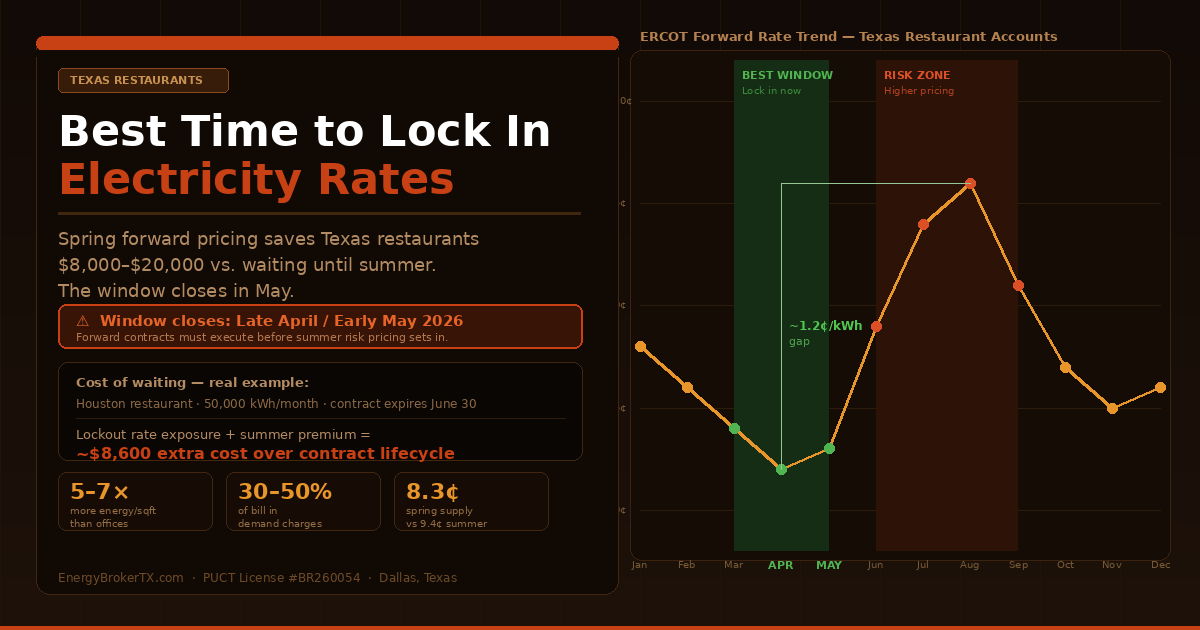
Timing is everything in Texas energy. Wholesale prices peak in summer (up to 45% higher at ERCOT hubs) due to AC demand, making spring or fall the prime windows for locking in lows. The PUC recommends starting reviews 60-90 days before expiration to avoid auto-rollovers to variable plans, which can cost 20-50% more during heatwaves.
Monitor indicators like natural gas futures—projected at $4.80/MMBtu in 2025—which heavily influence rates. Tools from the EIA can help forecast; if prices are dipping, extend your term for stability. A Plano office building timed their renewal in March 2024, securing a 36-month fixed rate before a 12% summer surge—netting $18,000 in savings.
For renewals, scrutinize your Electricity Facts Label for hidden escalators. If switching, Texas law allows seamless transitions within 14 days post-enrollment without penalties. Businesses ignoring this often overpay; McKinsey estimates poor timing adds 10-15% to annual costs.
If your usage has shifted—perhaps from efficiency measures like smart thermostats—adjust accordingly. Exploring cost-saving strategies can complement this, ensuring your new contract reflects real needs.
4. Capitalize on Energy Efficiency Rebates and Upgrades
Efficiency isn't just eco-friendly—it's a direct path to lower bills. Texas utilities offer rebates through programs like Oncor's Take a Load Off Texas, covering 20-50% of upgrades such as LED lighting or high-efficiency HVAC. Deloitte's energy transition analysis shows these can reduce consumption 15-25%, compounding savings on your per-kWh rate.
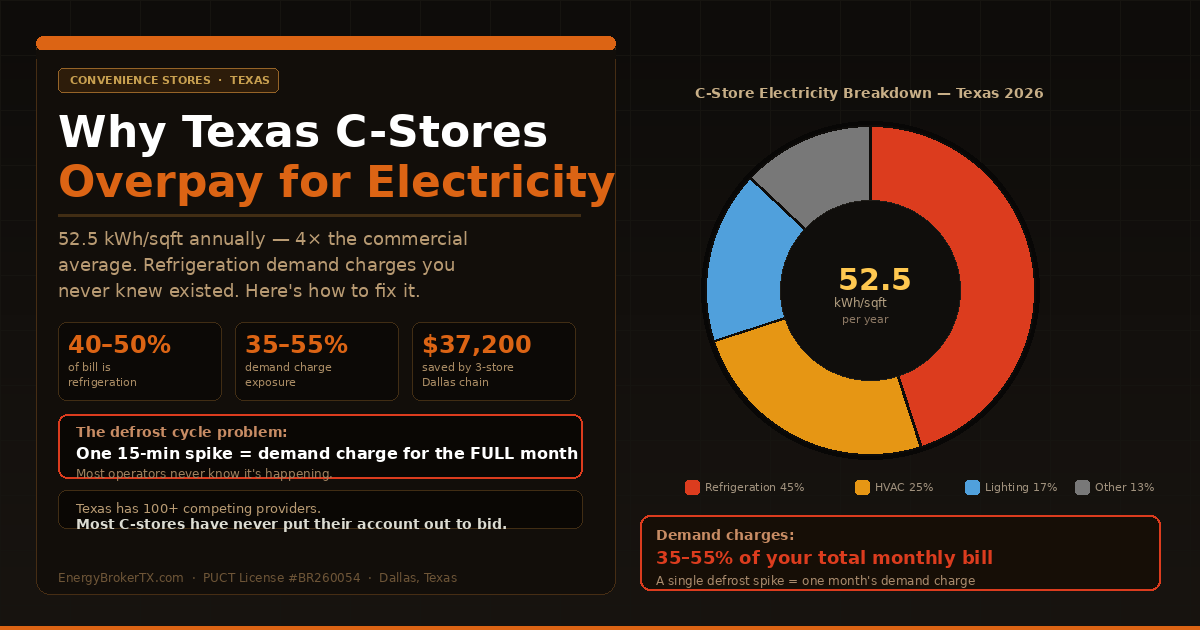
Start with an audit: Identify high-draw areas like refrigeration in stores or motors in factories. Simple fixes, like variable-frequency drives, cut demand charges by 20%. A Dallas gym retrofitted LEDs and saved $4,500 yearly, plus $2,000 in rebates.
Integrate with your plan: Lower usage qualifies for better rates in auctions. For green incentives, the Inflation Reduction Act provides 30% credits for solar—perfect for rooftops in sunny DFW. CenterPoint's programs add rebates for smart tech, further dropping costs.
Track ROI: Upgrades pay back in 1-3 years; pair with bill analysis to measure impact.
5. Establish Ongoing Monitoring and Adjustment Practices
Savings don't end at signing—ongoing vigilance ensures they stick. Set up quarterly reviews to spot anomalies like unexplained spikes, which could signal equipment issues or errors. PUC data reveals 10% of commercial bills contain mistakes, recoverable through disputes.
Use software for real-time tracking; apps integrate with smart meters to forecast peaks and shift loads. For example, a Fort Worth manufacturer automated HVAC scheduling, trimming 12% off bills.
Stay informed on market shifts: ERCOT alerts on scarcity can prompt temporary curtailments for credits. Adjust plans annually; if rates drop, renegotiate early.
For complex setups, brokers provide dashboards and alerts. This proactive stance, per McKinsey, sustains 10-20% annual reductions.
The Path Forward: Turning Energy into a Strategic Asset
In Texas's fast-paced market, treating energy as a strategic lever separates thriving businesses from those treading water. By leveraging deregulation, auctions, timing, efficiency, and monitoring, you can transform a volatile expense into predictable savings. Companies implementing these see not just lower costs but improved resilience against events like winter storms or summer surges.
At Energy Broker TX, our Dallas-based team has helped hundreds of businesses do exactly that, with PUC-licensed expertise (BR260054) ensuring every step is compliant and client-focused. If you're ready to review your setup, head to our contact page for a no-obligation consultation and free quote. Let's make 2025 your year for energy efficiency.