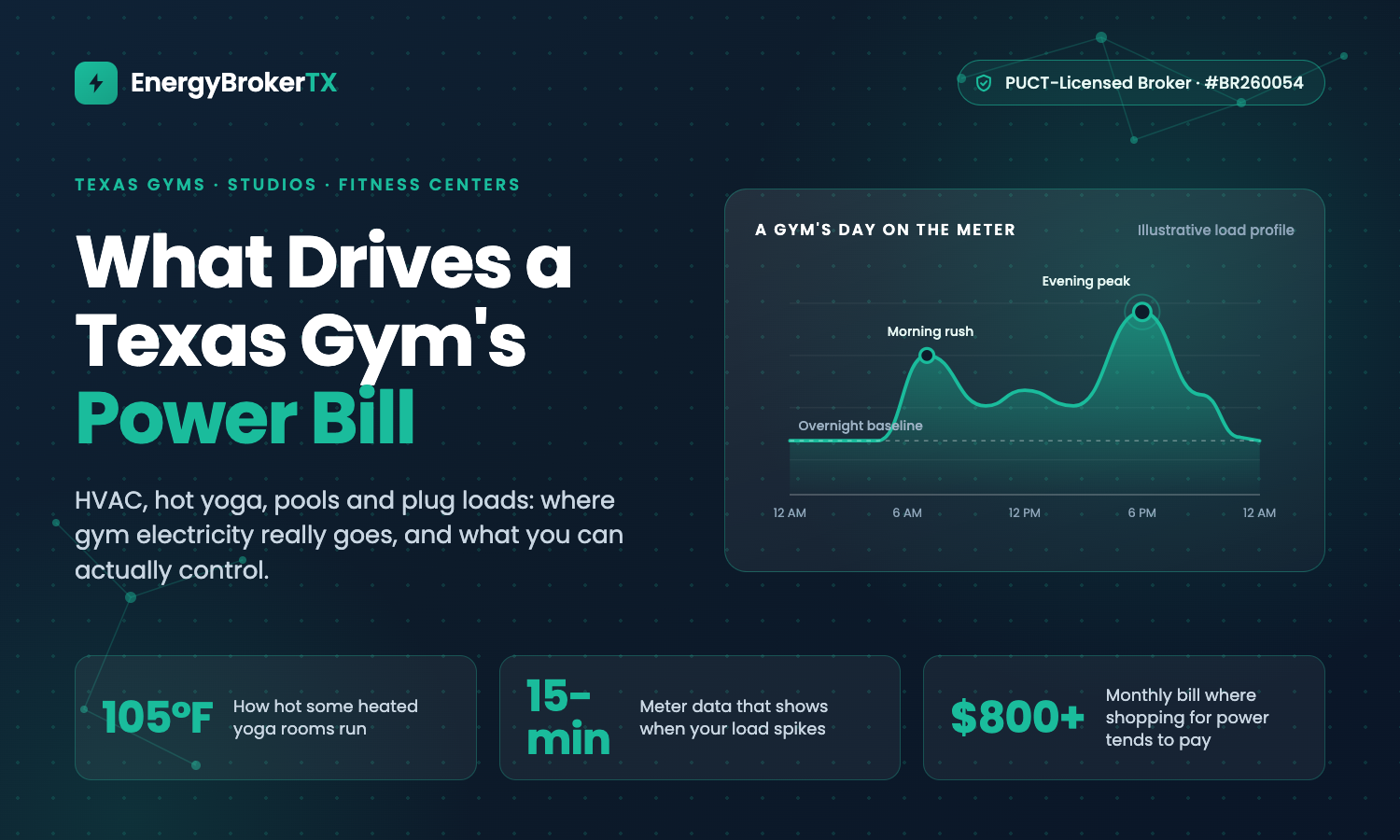
Texas Gyms, Yoga Studios and Fitness Centers: What Drives the Power Bill
What drives the power bill at Texas gyms, yoga studios and fitness centers, from HVAC and hot yoga to pools, and when shopping your rate pays off.


The Texas energy market in 2026 continues to evolve rapidly, presenting both exciting opportunities and notable challenges for commercial customers like laundromats, small businesses, manufacturers, and other high-usage operations. With renewable energy capacity surging, unprecedented demand growth driven by data centers and industrial expansion, and ongoing improvements in grid reliability, staying informed is essential for controlling costs, avoiding surprises, and ensuring operational stability.
As Texas's leading energy brokerage firm based in Dallas, EnergyBrokerTX.com helps businesses navigate these dynamics through expert analysis, reverse auctions with 25+ providers, and customized procurement strategies. Here's a detailed, up-to-date look at the key trends shaping the Texas deregulated electricity market in 2025-2026—and actionable steps to position your business for savings and resilience.
Texas remains the national leader in wind and solar, with renewables now playing a dominant role in meeting demand. In the first nine months of 2025, wind and solar together supplied about 36% of ERCOT's electricity needs—an all-time high—with utility-scale solar output surging 50% year-over-year to 45 TWh and wind contributing 87 TWh.
This abundance creates distinct pricing patterns: Electricity is often cheapest midday when solar production peaks (sometimes flooding the market and driving prices near zero or negative), while evenings see higher "net peak" costs as solar fades and demand remains strong from lighting, HVAC, and appliances.
For commercial users like laundromats with heavy daytime or evening loads, this means potential savings through time-of-use or load-matched plans. EnergyBrokerTX analyzes your usage profile to recommend fixed-rate contracts timed for low-price windows or structures that reward off-peak shifting.
Tip for businesses: If your operation runs washers and dryers during daylight hours, explore plans that capture solar-driven lows. Contact us for a free usage analysis to see if you're positioned to benefit.
ERCOT's electricity demand grew 5% in the first nine months of 2025 compared to 2024, reaching record levels and outpacing every other U.S. grid. Projections show continued rapid increases: Demand could rise another 14% by mid-2026, with long-term forecasts pointing to peaks climbing from around 85-94 GW in recent years toward 145 GW by 2031.
A major driver? Data centers and large flexible loads (including AI, crypto, and manufacturing), which are forecast to account for nearly half of new growth in some scenarios. Texas already hosts hundreds of data centers, with demand from these facilities jumping significantly and pressuring wholesale prices upward in certain hubs.
This surge tightens supply margins and can push commercial rates higher if not managed proactively—especially during summer peaks or extreme weather. However, it also creates leverage for high-usage businesses in competitive bidding.
EnergyBrokerTX runs reverse auctions that pit providers against each other using your load data, often securing 15-30% savings versus auto-renewal rates. We monitor wholesale forecasts and data-center-driven trends to time your procurement before rates climb further.
Pro tip: Review your current contract expiration—many businesses lock in now to hedge against 2026-2027 upward pressure. Explore commercial electricity rates tailored to Texas businesses.
Post-2021 winter storm improvements continue: ERCOT added substantial battery storage (averaging 4,000 MW during peak evening hours in 2025 summers) and renewables have helped avoid conservation alerts in recent seasons. Solar and batteries have proven vital in offsetting variability and supporting reliability during high-demand periods.
Natural gas remains the backbone for dispatchable power (supplying ~47-50% of generation in key quarters), providing essential balancing when renewables dip.
For critical operations—laundromats open extended hours, food services, or any business sensitive to outages—consider plans with outage credits, demand response incentives, or backup protections.
Our team evaluates these options, including dual-fuel or flexible terms, to minimize downtime risks without overpaying.
Helpful resource: For more on energy efficiency that complements reliability, check our guide to energy-saving tips for small businesses.
The most successful businesses in today's market don't rely on guesswork—they use analytics. Wholesale prices in 2025 averaged lower in base cases (~$27-34/MWh in some forecasts) due to renewables, but volatility from demand spikes and weather remains.
EnergyBrokerTX leverages real-time market data, ERCOT forecasts, and proprietary tools to identify optimal lock-in windows. Our reverse auction process is free for clients: We aggregate supplier bids, negotiate terms, and deliver the lowest effective rate matching your load shape.
Many clients see significant reductions—especially if previously on higher renewal rates—while gaining protections against spikes.
Action step: Schedule a no-obligation bill review. We'll benchmark your current rate against market trends and model potential savings. Learn more about our energy brokerage services.
The Texas market rewards proactive, informed decision-making. Renewables are delivering cheaper, cleaner power during key hours, but surging demand from data centers and industry adds upward pressure and volatility. Grid enhancements are bolstering reliability, yet extreme weather remains a factor.
By partnering with EnergyBrokerTX, Dallas-based experts in the deregulated market, your business gains agility: Data-driven timing, competitive bidding, and tailored plans that align with your usage and goals. This approach helps control costs, reduce risks, and support long-term competitiveness.
Ready to future-proof your energy strategy and potentially cut bills significantly?
Get a free, customized quote today—no obligation, just insights. Contact EnergyBrokerTX now and let's secure your advantage in 2026 and beyond.
Submit your account and we'll run a competitive auction with 25+ licensed Texas providers — full bid transparency, no pre-filtering, no obligation.
Get My Free Competing Bids →